Lesson 02 · In the glass

Tannins

what they are and why they need time

What it is

Tannin is what makes a red wine dry your gums. It comes from the grape itself: the skins, the pips and the stalks. Young, it feels rough and dusty. Given time and a little air, it softens, and the wine turns silky. That is why a serious red often needs years in the bottle.

Most people link tannin with big reds that grip the whole mouth. In fact its story starts long before there is any wine: on the vine, in a berry that is still green, in the middle of summer. White wines have tannin too, just far less of it.

At that stage it is raw, a bit coarse, almost aggressive, like a teenager who has not learned his manners yet. As the grape ripens, the tannins join up, rearrange themselves and soften little by little. The teenager learns to round off the corners.

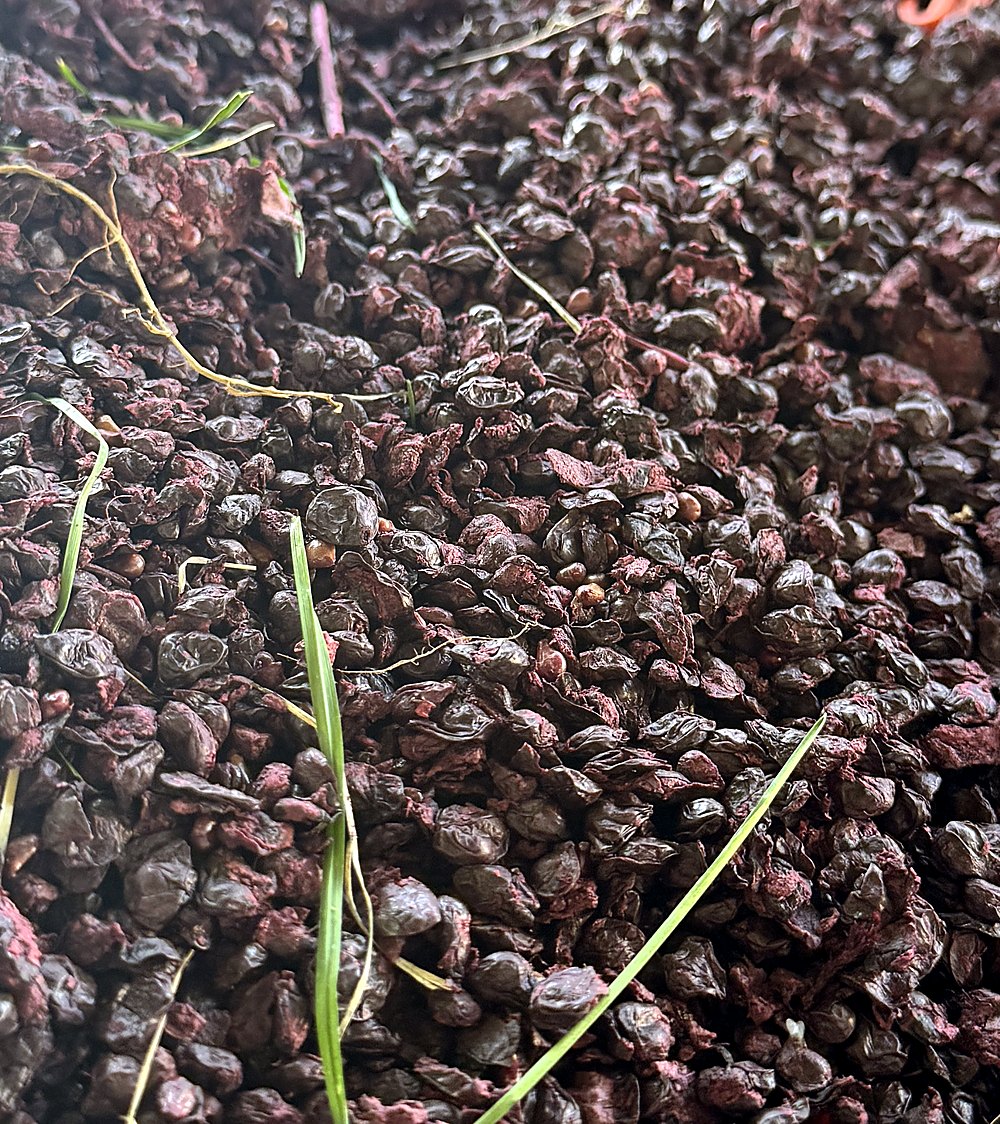
Pressed red grape skins, pips and bits of stalk in a trailer in Irancy

Skins, pips and stalks, just out of the press · Irancy, September 2026

On the vine

Two kinds of ripe

A grape ripens twice over, and the two do not always arrive together.

Maturité technologique
Technological ripeness: the balance of sugar and acidity. It largely decides the day of the harvest.
Sugar and acid
Maturité phénolique
Phenolic ripeness: how far the tannins in the skins and pips have come. Just as important for reds.
Tannin

A grape can be ready on sugar while its tannins are still green and stern: tall enough to be handed the house keys, not grown-up enough to leave the house standing. That is the grower's puzzle. The right day to pick is often a compromise between the two.

How does a grower tell? Not with an instrument. He walks the rows and eats the grapes. The sugar he can taste at once; the tannin he reads in the pip. Crunch one. Green and bitter, with the skin still clinging to the pulp: wait. Brown, crunchy, almost nutty, with a skin that comes away clean: the tannin has arrived.

In a hot year the two drift apart. The sugar races ahead while the tannin dawdles, and the grower has to choose: pick early for freshness and live with a touch of green, or wait for the tannin and accept a bigger, riper wine. Irancy sits on the cold northern edge of Burgundy, which is a large part of why its tannin, once ripe, is so fine. And still, in 2026, Éric had finished picking in August.

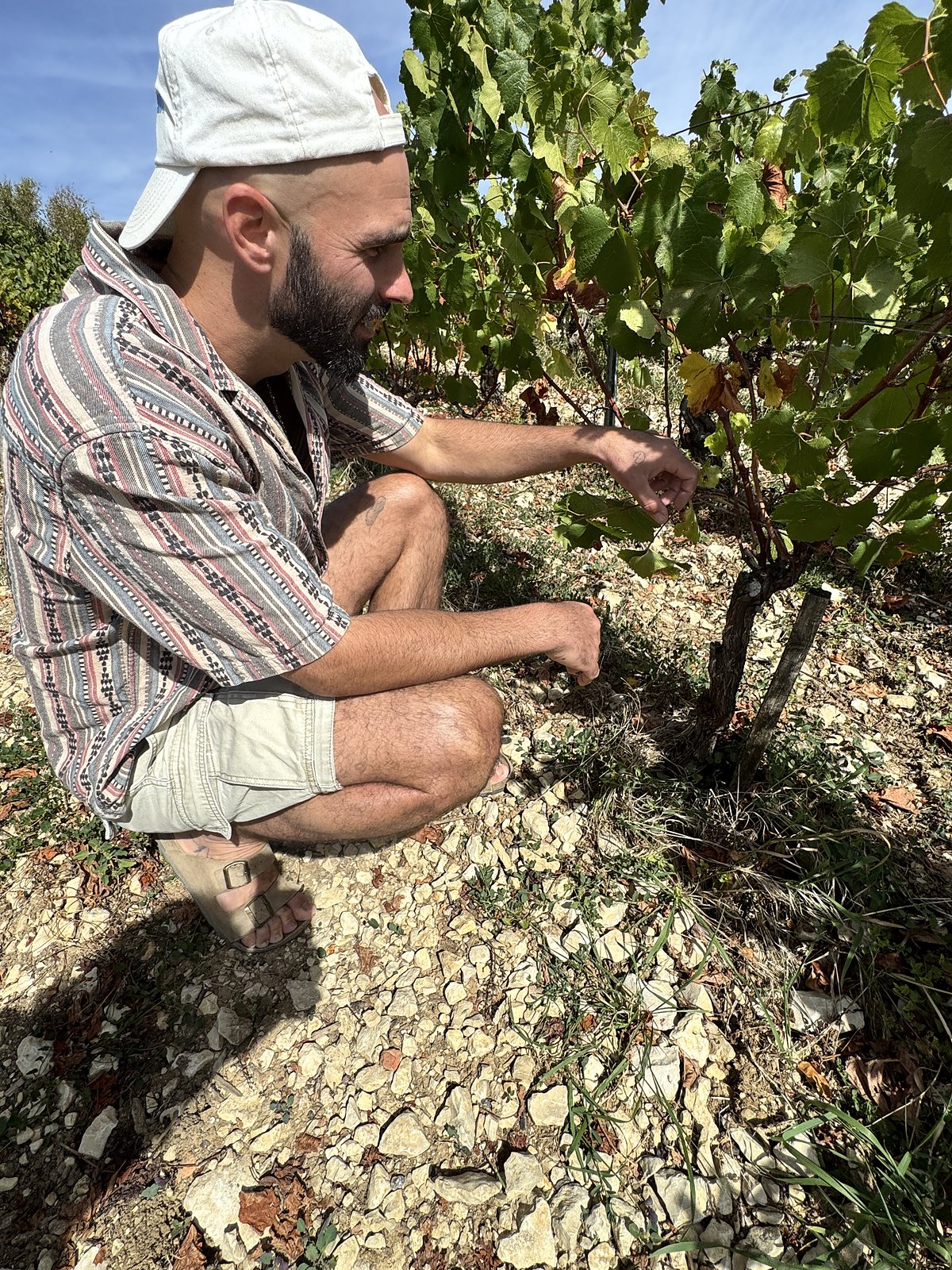
Marcel crouched in a row of vines in Chablis, his hand on a bunch of grapes

Chablis · harvest time · September 2026

In your mouth

Rough, then silky

Unripe tannin feels rasping, almost dusty. It dries and it grips, as if the wine were scratching your gums instead of stroking your tongue. Ripe tannin feels silky and round: the wine still has structure, but it is polished, almost velvety. The teenager has grown up. Still a character, just no longer flattening everyone in the room.

1

Macération

how much tannin comes out · the grower's lever

The grower is not just a spectator. The most direct lever is maceration: how long the juice stays in contact with the skins and pips. Longer means more tannin; shorter keeps the wine lighter. During fermentation the skins float up and form a cap, and there are two ways to push it back into the juice: pigeage, punching the cap down, and remontage, pumping juice from the bottom of the tank and pouring it over the top.

In short Two different ways of getting more out of the skins.
2

Oxygène

a little air · softer tannin

Once the wine is made, the story carries on. Small doses of oxygen help the tannins polymerise, a big word for a simple thing: small tannin molecules join up into bigger, steadier ones, which feel gentler in the mouth. That is the point of ageing in wooden barrels, whose walls let a little air through all the time. It even carries on in the bottle: over the years, a tiny thread of oxygen slips in between the cork and the glass of the neck.

Why it needs time It is partly how a great red rounds out in the cellar. We say the same of people: they get better with age.
3

Salive

why your mouth dries · why food helps

The dry feeling has a simple cause. Tannins bind to the proteins in your saliva, so it lubricates less, and your mouth feels dry, almost rough. If a tannic wine seems softer with food than on its own, you are not imagining it: the tannins bind to the proteins on your plate first, and leave your saliva alone.

At the table Red meat, a well-aged cheese: the dish soaks up part of the dryness and lets the fruit and structure of the wine come through.

Tannin is a teenager. Raw at first. Then, with time and a little air, it learns its manners.

Try it at home

The cheese test

Pour a red with some grip and taste it on its own. Notice where it dries: the gums, the inside of the cheeks. Now eat a piece of well-aged cheese and taste again. "Softer, isn't it?" Not your imagination. The tannins are busy with the cheese instead of your saliva.

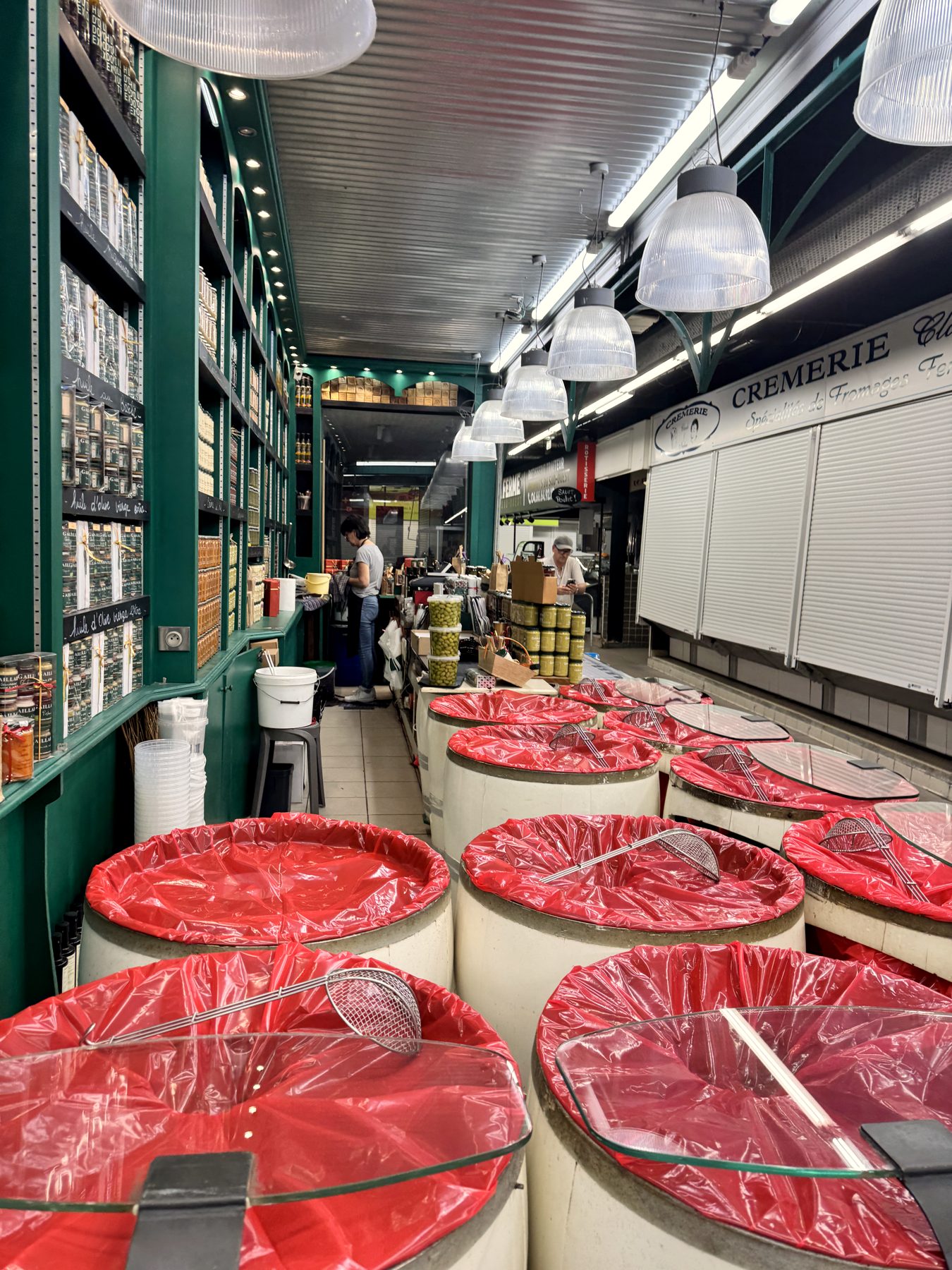
Inside the covered market in Nîmes, stalls under a crèmerie sign

Nîmes · Les Halles · the crèmerie

Two short films

Marcel on tannins, on a terrace at Vézelay

Filmed in one sitting at Vézelay in September 2026, two pieces of the same conversation: what a tannin is and why it dries your mouth, then what time and a whisper of air do to it.

Why red wine dries your mouth

Tannins bind to the proteins in your saliva and stop dissolving, which is the dry feeling, and it is why cheese or meat make a big red feel gentler.

Time, air and the cork

As a bottle ages the tannins join into longer chains and turn silkier, and Marcel points to where he thinks the air that does it gets in.

This is Marcel's chemistry, told the way he tells it over a glass. The full explanation, including the bits he skips, is in the lesson text on this page.

The words

Little glossary

taninstannins, from the skins, pips and stalks; they dry the mouth
raflethe stalk, the little frame that holds the berries together
maturité technologiqueripeness measured by sugar and acidity
maturité phénoliqueripeness of the tannins in the skins and pips
polymérisationsmall tannin molecules joining into bigger, gentler ones
macérationtime the juice spends with the skins and pips
chapeauthe cap of skins that floats up during fermentation
pigeage · remontagepunching the cap down · pumping juice over it
astringencethe dry, gripping feeling tannin leaves in the mouth