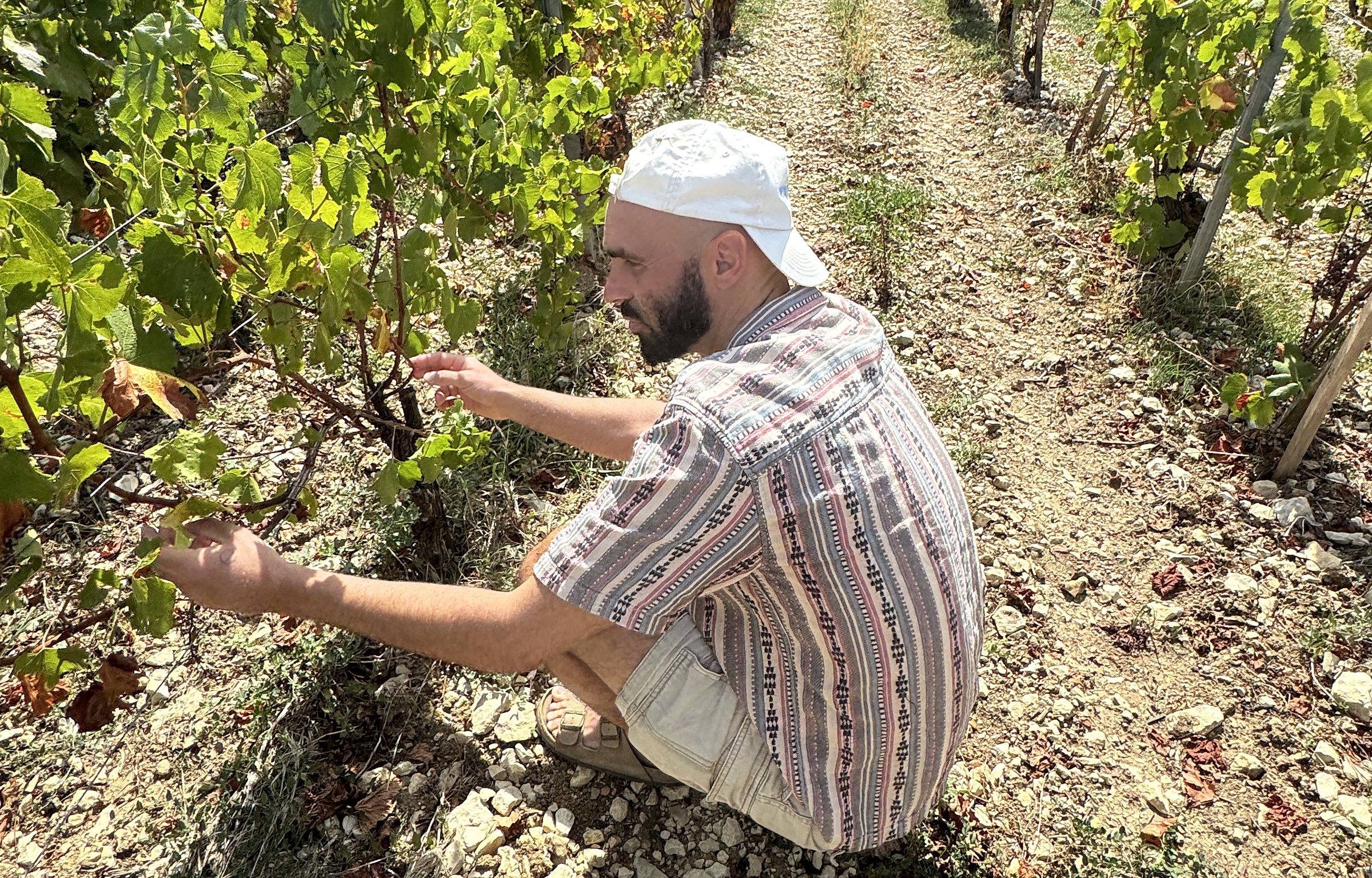
Marcel crouching in a row of vines in Chablis

The school

Wine is best learned glass in hand.

Short lessons, filmed at the growers’, and a few pages to read at your own pace. No exam at the end.

To readThe tipsTo watch

Technically, wine is a matter of balance. But above everything, wine is emotion.
Paraphrasing Stéphane Rosa, Guide Hachette des Vins
To read

The notebook.

A piece of advice, a tip, part of a lesson. We write when we have something to say, and not before.

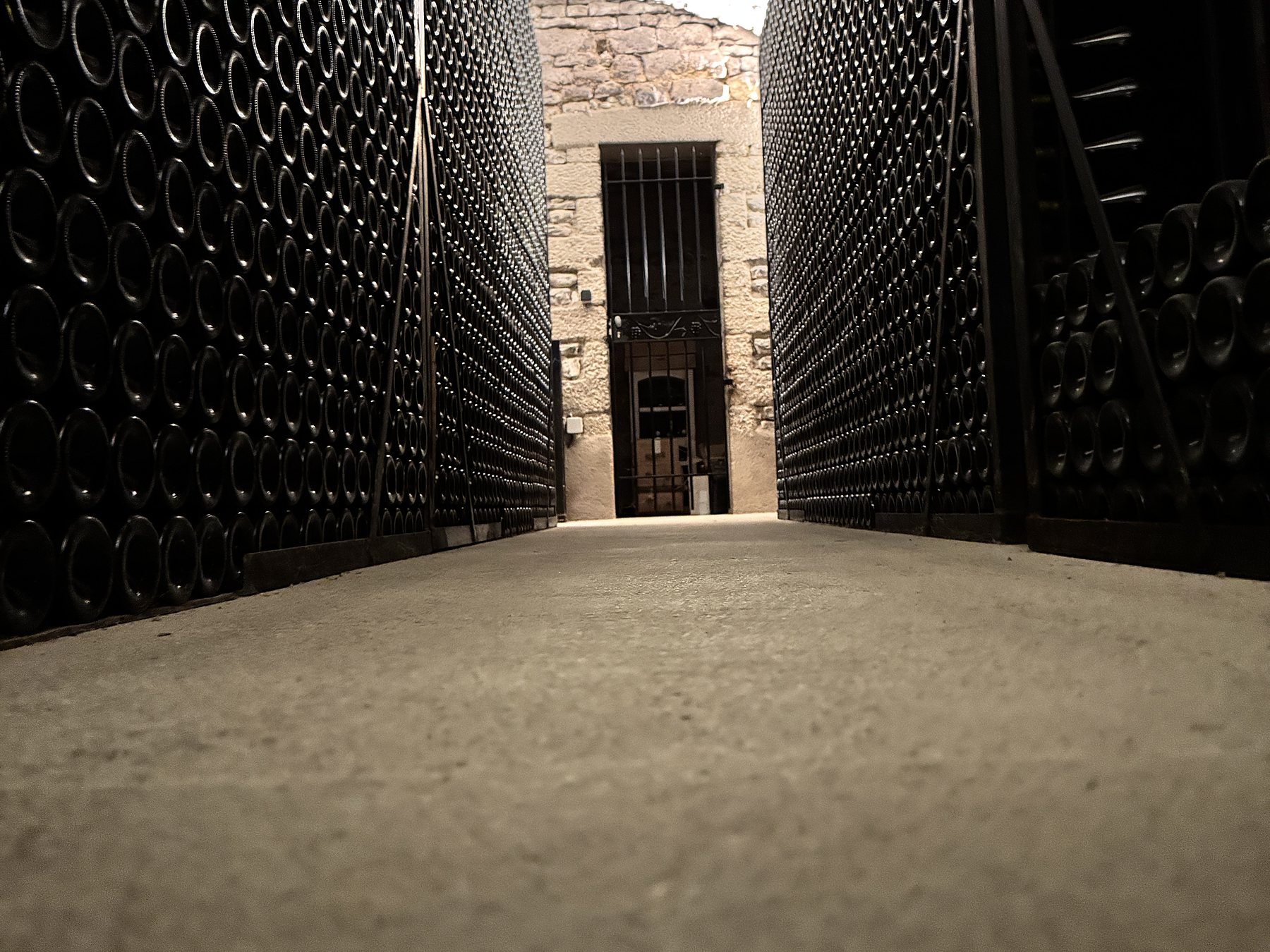
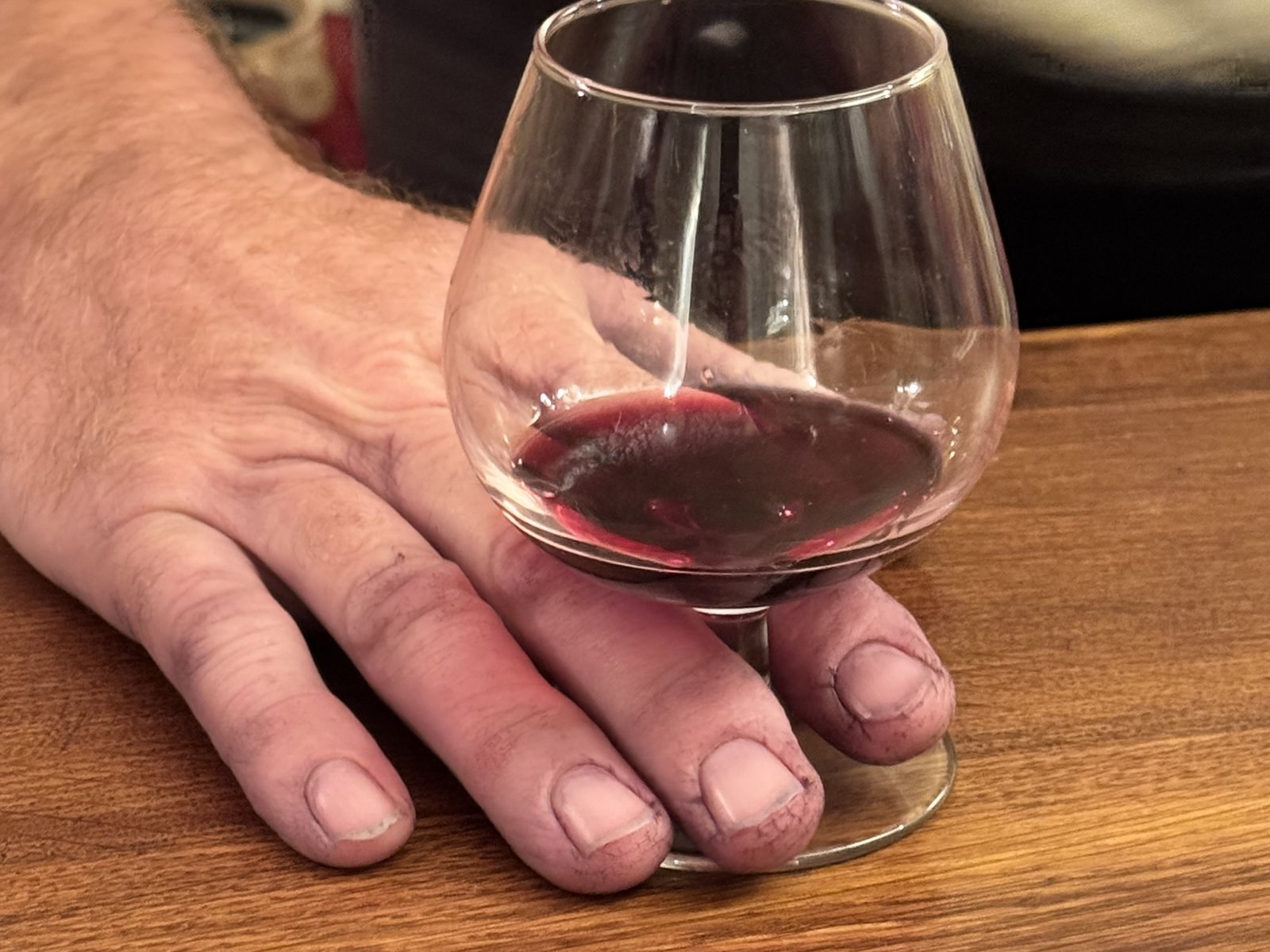
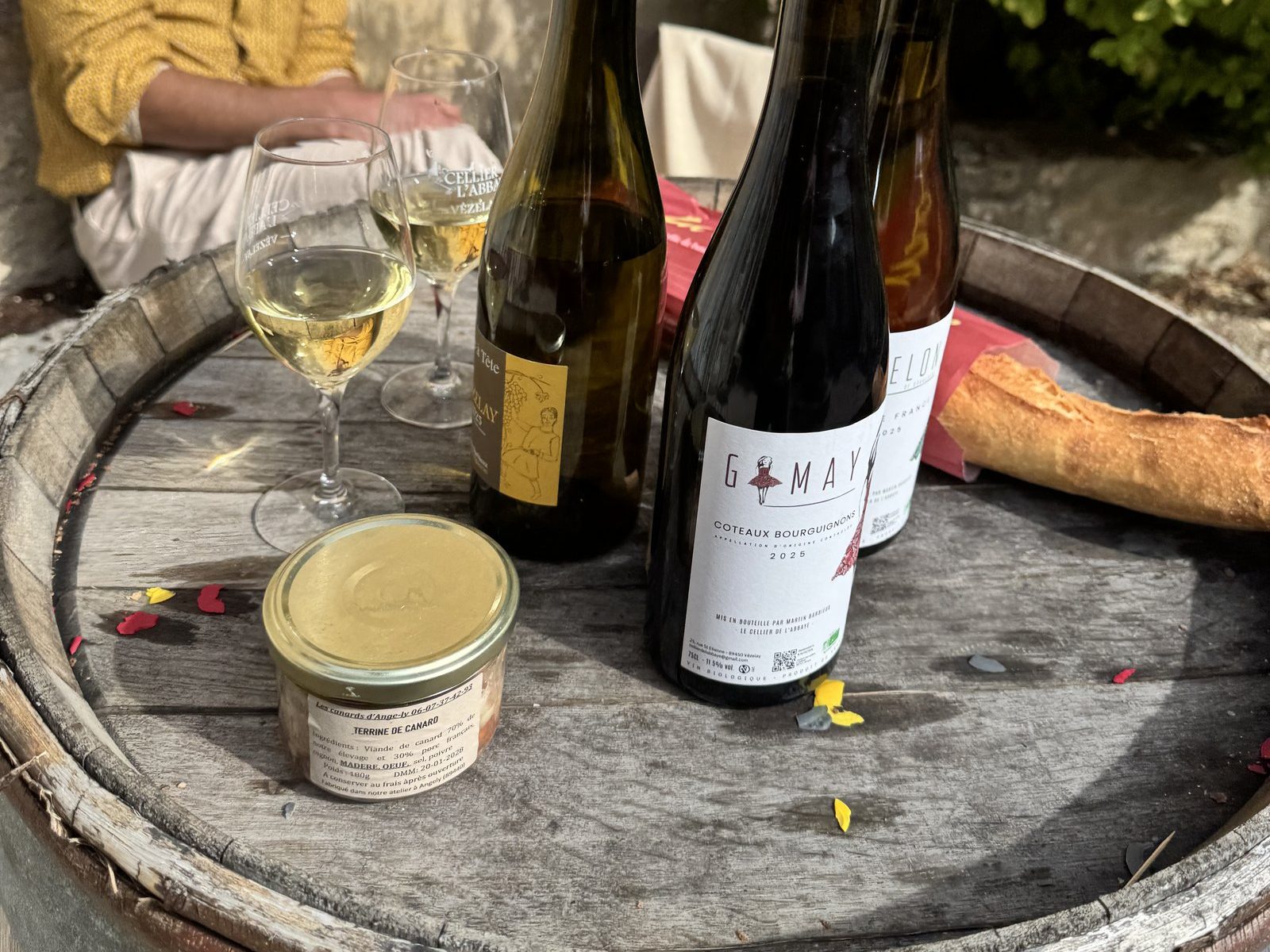
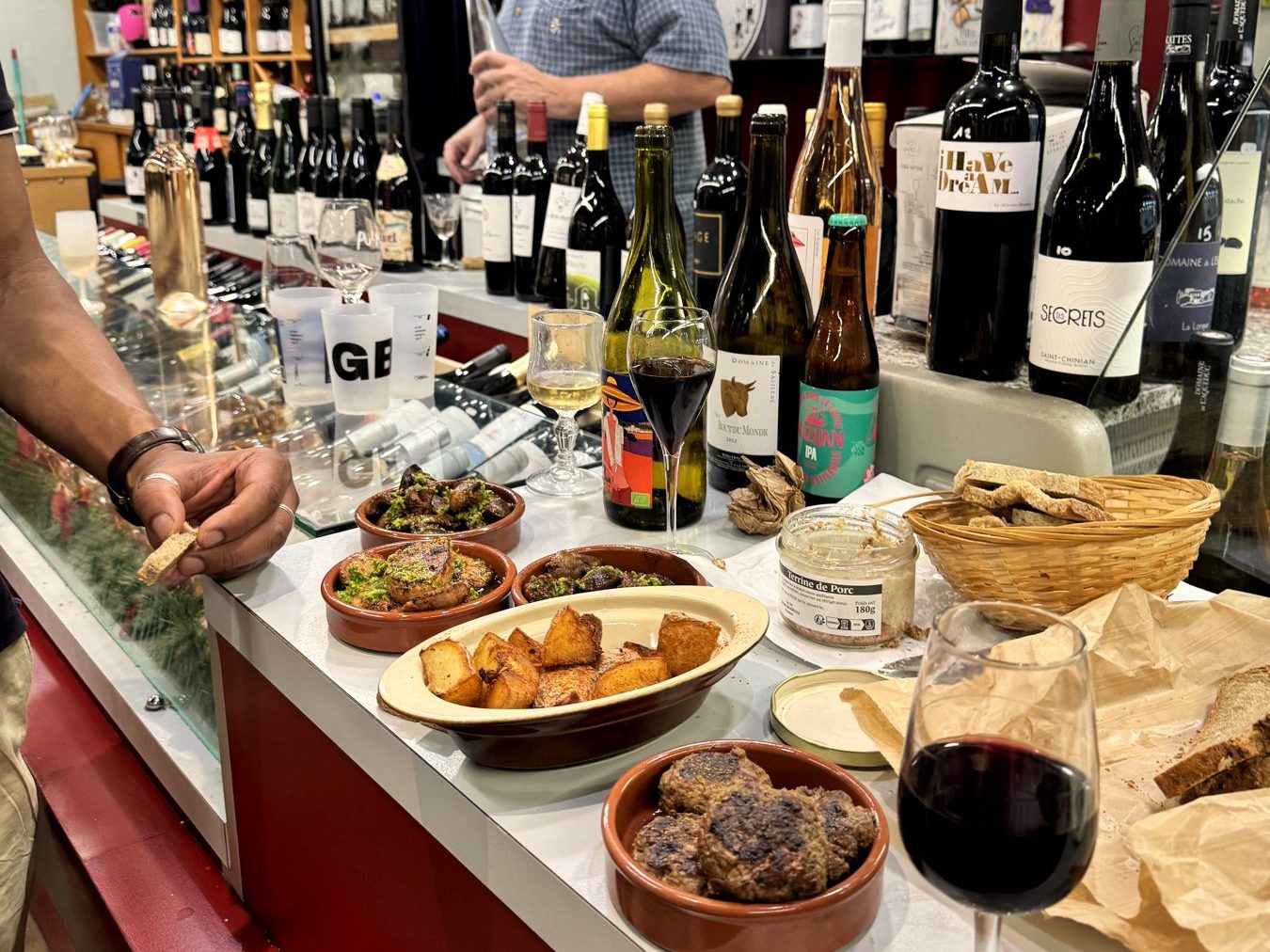
A long vaulted cellar under Irancy, thousands of bottles lying on each side Lesson 01 · The cellar Élevage How a wine’s long rest quietly transforms it. The vessels, from barrel to amphora, and the three C’s: clair, constant, complexe. Read the lesson A hand resting on a glass of red wine on a wooden counter Lesson 02 · In the glass Tannins What dries your gums, where it comes from in the grape, and why a serious red needs time to soften. Read the lesson Marcel crouched in a row of vines in Chablis, the slopes behind him Lesson 03 · The vine Vintages Why the same bottle never tastes the same twice. One year’s weather, region by region, and how to read a year on a label. Read the lesson Bottles, two glasses of white, a small jar and a baguette on the top of a barrel, in the sun Lesson 04 · Serving Serving temperature Why whites are served cooler than reds, what cold does to tannin and aroma, and a simple guide to getting it right. Read the lesson The wine counter at Les Halles de Nîmes: bottles, small dishes of food and a glass of red Lesson 05 · At the table Food and wine Two ideas instead of a thousand rules, four regional classics, and the pairings to avoid. Read the lesson

More pages on the way.

The Cellar Notes

Everything worth knowing, none of the lecture.

Marcel talks, the facts are checked. Pick a card.

Galets & garrigue

“You can smell the hillside in the glass. That is not poetry, it is the ground.”

The famous galets roulés are round quartzite pebbles the Rhône rolled down from the Alps and left across the vineyards. They soak up the day’s heat and give it back to the vines overnight, helping the fruit ripen. Garrigue is the wild Provençal scrub, thyme, rosemary, lavender, and it is exactly what you catch on the nose of a good southern red.

Marcel’s own notes, from his years among the growers of the southern Rhône.

Galets
round stones, store & radiate heat
Garrigue
thyme, rosemary, lavender
The Rhône
rolled the stones here, long ago

Four steps, that is all

“You do not need the words. You need to slow down for thirty seconds.”

1. Look at the colour and the edge, it hints at the grape and the age. 2. Smell, the fruit first, then the earth and herbs underneath. 3. Taste, notice the acidity, the tannin, the weight, and how long the flavour stays. 4. Decide, what is it like, and what would you eat with it. That is the method the wine schools teach, minus the exam.

The way Marcel tastes, and the way he teaches it.

1 · Look
colour, edge, age
2 · Smell
fruit, then earth
3 · Taste
acid, tannin, length
4 · Decide
what to eat with it

What to eat with it

“A wine has a best friend at the table. We will always tell you who it is.”

A Gigondas loves a slow lamb shoulder with rosemary. A serious Tavel rosé is built for bouillabaisse or grilled red mullet. Save the Châteauneuf for something that cooked all afternoon, a daube, a civet, beef cheeks. A southern white, all Grenache Blanc and Roussanne, is roast chicken and herbs.

From our grower notes; every pairing is one we have actually eaten. The full lesson: Food and wine.

Gigondas
rosemary lamb shoulder
Tavel rosé
bouillabaisse
Châteauneuf
a daube, beef cheeks
Southern white
roast chicken & herbs

How to read a French label

“A bottle’s label is, more or less, the wine’s identity card.”

In front of a shelf, three reflexes are enough. First, find the appellation and the bottling line: “mis en bouteille au château” or “au domaine” means a grower’s own wine, followed from the vine to the bottle. Next, don’t take words like “vieilles vignes” (old vines) or “élevé en fût” (aged in barrel) on trust: they are a hint, not a guarantee. And last, if a word you don’t know is printed big on the label, ask yourself: grape, place or estate? The answer often changes how you read the whole bottle.

A Tiños Viños plain-English guide. Marcel approves every claim.

Appellation
the place
Domaine
the producer
Cépage
the grape variety
Mis en bouteille au domaine
made start to finish on the estate

Serving & keeping

“Most people serve reds too warm and drink them too young. Two easy fixes.”

Serve the reds a touch cool, around sixteen degrees, and give a young Grenache an hour in a carafe. To keep a bottle, lay it on its side somewhere dark and steady at twelve to fourteen degrees, so the cork stays damp. And a bottle that has just travelled likes a few days to settle before you open it.

The full lesson: Serving temperature.

Serve reds
~16°, not room-warm
Decant
young Grenache, one hour
Keep
on its side, 12–14°, dark
To watch

The lessons on film.

Filmed on the spot, with the people who make the wine. Subtitled in English.

Irancy · 1 min

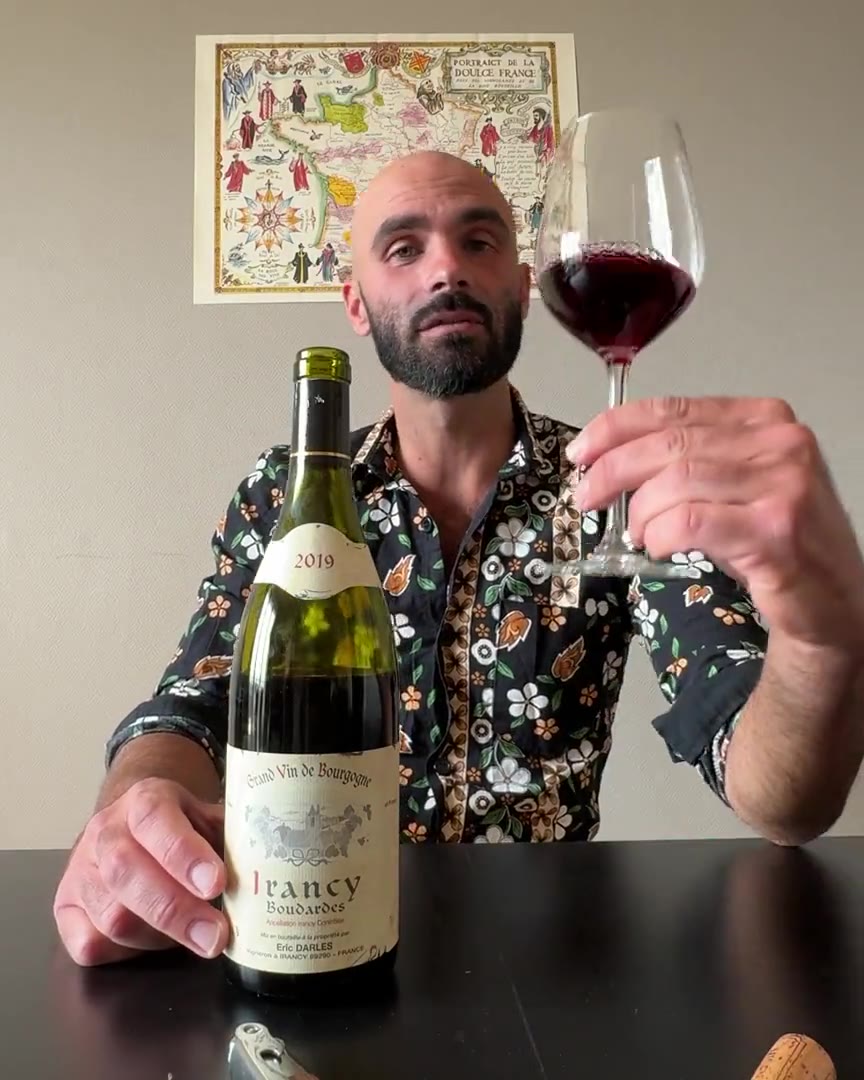
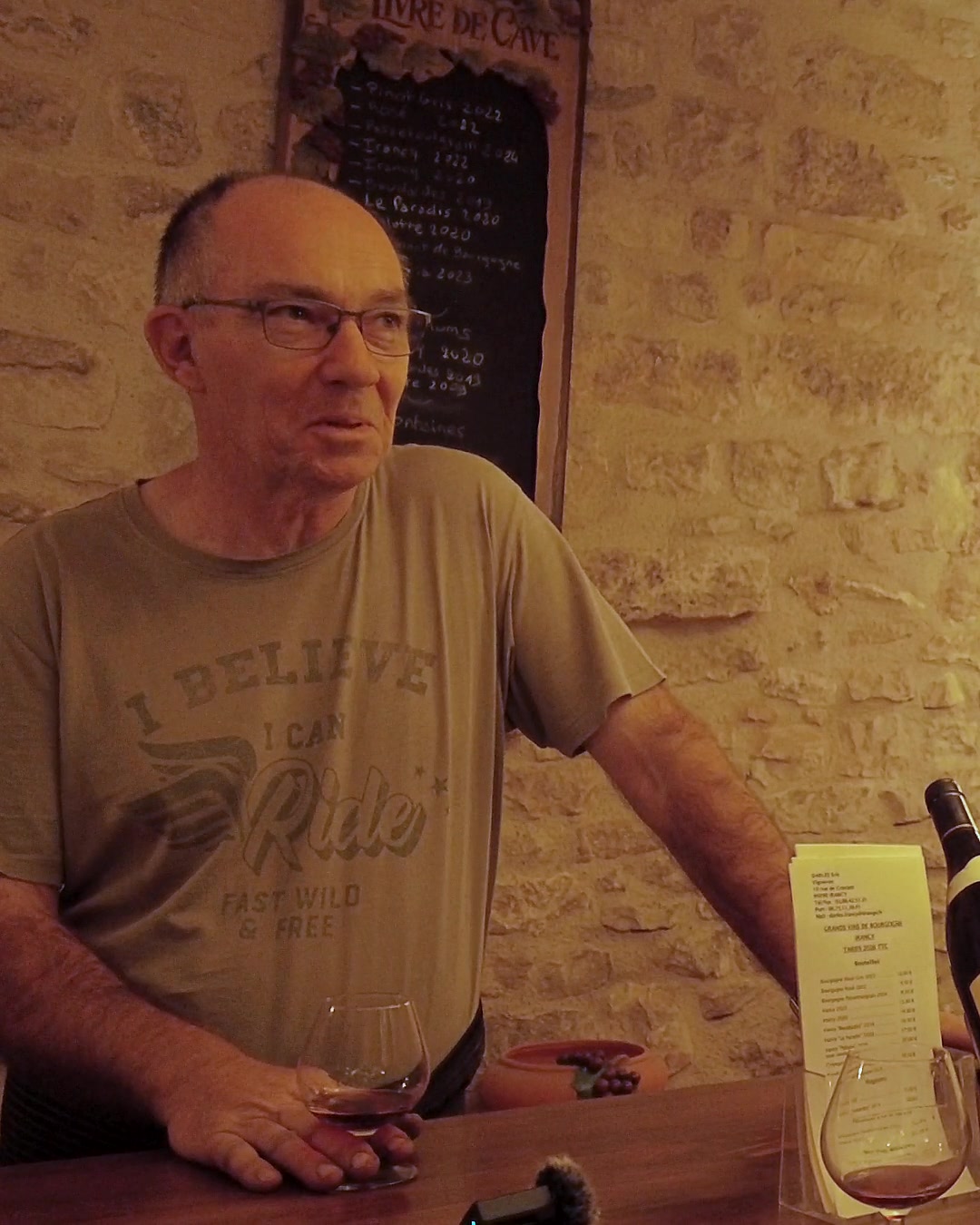
Oak, according to Éric

Marcel asks Éric Darles how he sees oak. The answer takes one minute: no new barrels, and here is why.

What to take away

  1. No new barrels. For Éric they bring too much tannin, and too much of that new-oak taste he does not want on his Irancy.
  2. Barrels three to eight years old. In a slightly older barrel, he says, the oak is finer and better melted in.
  3. All his bottled Irancy goes into barrel. The wood keeps the wine company. It does not stand in front of it.
« So that is out of the question. »
Éric Darles, on new oak

Why the barrel matters: the Élevage lesson

Near Vézelay · September 2026

Why do we swirl the glass?

The question everyone is too polite to ask. Forty-five seconds, one answer.

What to take away

  1. Aromas are volatile. They lift off the wine into the air just above it, which is where your nose is.
  2. Still glass, light aromas. Smell it without moving it and you only meet the lightest ones.
  3. Swirl, and the heavier ones arrive. Air brings them out and up to your nose. Smell before, then after.

Filmed by two friends, not a film crew. The sound and framing aren't perfect: for us, what's said is what counts. We're getting better. Enjoy.

Courgis, near Chablis · September 2026

How to read a vine

Marcel stands in a row of vines at Courgis and shows Matt what the wood is telling you: which shoots grew this year, which are last year's, and where the pruner's hand will fall in winter. Then the question Matt did not expect the answer to: how long does a vine live?

What to take away

  1. Read the wood. The lightest, smoothest canes are this year's growth; the rest is older, and the vine wears its years in layers.
  2. Prune to refresh. Each winter they keep one cane, tie it along the wire and cut the rest, so the plant gives a better harvest and does not get old before its time.
  3. Old vines go slow. A well-cared-for vine can pass 100 years and is only adult at about 30; young vines give more fruit, old ones give less of it, more concentrated.

The next ones are in the edit.

Questions

About the school.

Who writes the lessons?

Marcel, a Frenchman who lives in Dijon and has worked the vines in Chablis, with Matt asking the questions an ordinary drinker would ask. Filmed at the growers' and written up afterwards.

Do I need to know anything first?

No. Each lesson starts from the glass in your hand and explains every word it uses. There is no exam at the end.

Are the lessons free?

Yes, all of them, in English and in French.

Join the list.

Nothing to pay today. We write to you when each new grower is ready, and you decide then.