Lesson 01 · The cellar

Élevage

what happens to a wine between the ferment and the bottle

What it is

In short: élevage is the time a wine spends in tank or barrel between fermentation and bottling, anywhere from a few months to two years, sometimes longer. It comes out clearer, more stable and deeper.

Once the grapes have fermented, the wine is made, but it isn’t ready. It goes off to rest in tank or barrel, and that rest is called élevage, from the French verb élever, “to raise”, the same verb we use for children and livestock, which says a lot about how seriously we take all three.

Nothing spectacular happens, and that’s exactly the point: the wine clears, settles, and gains a depth it didn’t have at harvest. The vessel influences how much oxygen the wine receives and what is added to it from outside, oak first of all.

For us, this is the lesson hiding behind the others: this is where tannins soften, and a vintage is only half the story until the winemaker has decided how to raise it.

Where it happens

The vessels

Some vessels are neutral. Others weigh much more heavily on the wine, through micro-oxygenation, the slow trickle of oxygen through the wood, but also through what the wood gives it: tannins, toast, vanilla, sometimes spice. And neutral doesn’t mean still: even in a vessel with no effect on flavour, time is doing the work.

Cuve inox
Stainless steel. Airtight and neutral: nothing in, nothing out. The fruit stays exactly as it was.
Neutral
Fût de chêne neuf
New oak. Gives vanilla, toast and spice, and lets a whisper of air through the wood. The loudest of the vessels.
Adds flavour
Vieux fût
An old barrel. After a few vintages the flavour has mostly gone out of the wood, but it still breathes.
Nearly neutral
Cuve béton
Concrete, sometimes egg-shaped. No flavour, a little air, and a temperature that barely moves.
Neutral
Amphore
The clay jar, the oldest of all. Often porous, so the wine gets air without a taste of wood.
Air, no oak

Which is best? Wrong question. The right vessel is the one that suits the wine, and growers change their minds more often than they admit. Wood also drinks: a barrel loses a little wine to evaporation, so the grower tops it up, a job called ouillage.

What a little air does to tannin: see the Tannins lesson.

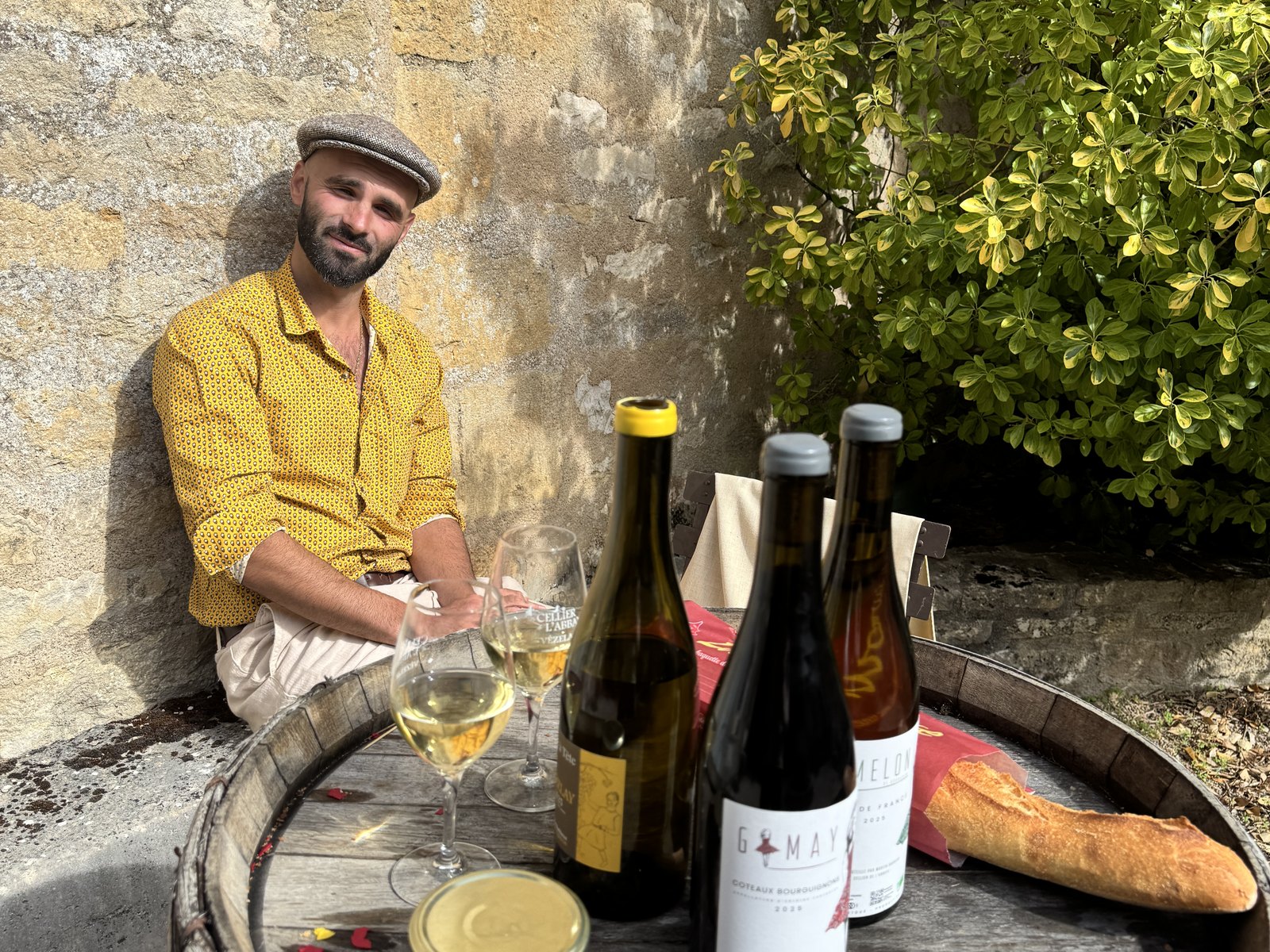
Marcel sitting against a stone wall beside an old wine barrel used as a table, with glasses, bottles and a baguette
Marcel, and a barrel that has done its work · September 2026

The heart of it

The three C's

Whatever the vessel, a well-raised wine leaves the cellar changed in three ways. All three begin with a C in French, which is how we remember them.

1

Clair

clear · bright · limpid

A wine straight out of fermentation is cloudy, full of spent yeast and bits of grape. Left alone, they sink into a sediment the French call the lies. The grower draws the clear wine off the top, soutirage, racking, and may do it several times. If the wine is still hazy there is collage, fining, where a little egg white or clay drags the last particles down, and filtration, the sieve. Many growers do as little of this as they can.

In the bottle A little sediment in the bottle is not a fault. The grower chose not to strip the wine bare. Stand the bottle up the day before, and pour steadily.
2

Constant

settled · stable · reliable

A young wine is restless. In the cellar it goes through its second fermentation, la malo, which turns sharp malic acid into softer lactic acid; nearly every red takes it. Tannins and colour join up, and some drop out. Tartrate crystals, harmless despite looking like crushed glass, settle in the cold of the cellar rather than in your bottle. By bottling day, the wine has got its arguments out of the way.

Why it matters A wine bottled too early carries on arguing. One bottled after a proper rest travels, keeps, and tastes like itself bottle after bottle.
3

Complexe

more aromas · more families · more to say

Straight out of fermentation, a wine smells mostly of fresh fruit, in all its brightness: that is the charm of a young wine. Élevage adds more. Time on the lees, in contact with the spent yeast, brings texture and a brioche-like richness, above all to whites. And the little air that passes through the wood of a barrel, or even less through the clay of an amphora, slowly moves the fresh fruit towards something deeper: candied fruit, leather, forest floor, the notes that give a wine its complexity.

Not only wood Old wood, concrete and clay let a wine grow up without putting it in a costume. Some of the wines we admire most never saw a new stave.

At a glance

Our Irancy, in Éric's words

The part of the story the label does not tell. So we asked.

Irancy "Boudardes" 2019 · Éric Darles

GrowerÉric Darles, Irancy, Burgundy
Grapes90% pinot noir, 10% césar, an old local grape known for firm tannin
In what?Barrel, for every bottle of his Irancy. Old barrels, three to eight years old: the oak, he says, is finer and better melted in.
New wood?None. Too much tannin, too much of that new-oak taste. "Ça, c'est hors de question."
How long?Our next question for Éric. In Burgundy, twelve to eighteen months is common; every cellar keeps its own clock.

Where this comes fromÉric told us, glass in hand, in his cellar in Irancy in September 2026. You can hear him say it in the film on the School page. We write down what the grower tells us, not what the textbook supposes.

In a cellar, nothing seems to happen. The wine clears, it settles, it deepens. That is what the waiting is for.

Try it at home

The barrel test

Pour yourself a glass of red, any red, and before you start overthinking it, simply name what you smell. The fruit comes mostly from the grape. Vanilla, toast, coconut, a waft of smoke: no, those come from the barrel. Once you can spot them, you can quickly tell how much room the grower gave the barrel, and whether the wine underneath has the structure and power to carry the oak without being buried by it.

With the Irancy, open a bottle now to try the test: the barrel stays discreet here, because Éric only ages his wine in old barrels. Keep another a little longer, and you’ll see that even though the élevage is over, the bottle carries on evolving, quietly.

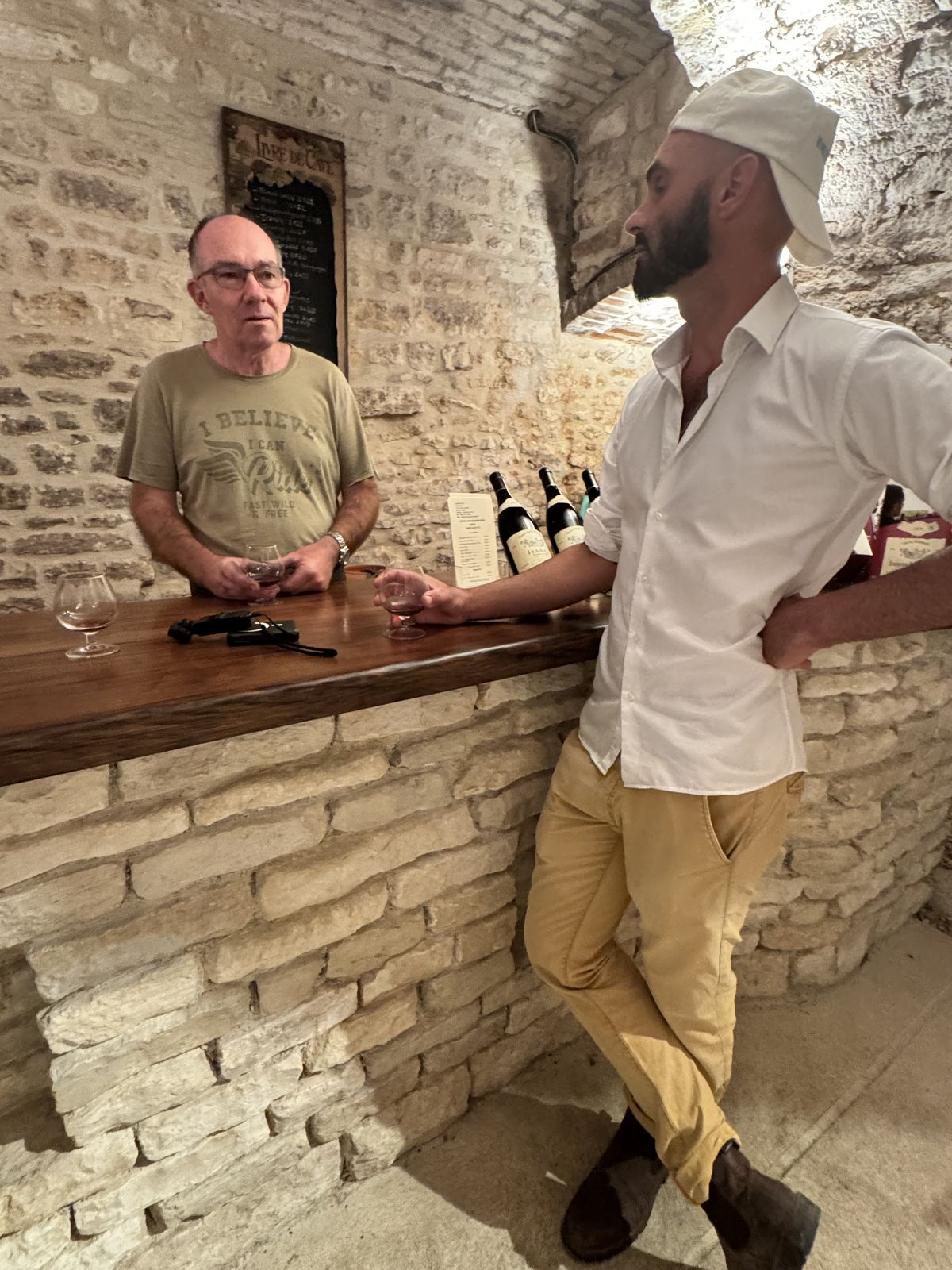
Éric Darles behind the counter of his vaulted cellar in Irancy, talking with Marcel

Irancy · in the cellar · September 2026

The words

Little glossary

élevagethe raising of a wine, between the end of fermentation and bottling
cuve inoxstainless steel tank, neutral and airtight
fût · pièce · barriquebarrel; Burgundy's pièce holds 228 litres, Bordeaux's barrique 225
bois neuf · vieux fûtnew oak · an old barrel that has given up most of its flavour
lies · sur liethe sediment of spent yeast · a wine left resting on it
soutirageracking: drawing the clear wine off the lees
collagefining: clearing a wine with egg white or clay
la malomalolactic fermentation, which softens the acidity
ouillagetopping up a barrel to replace what evaporates