Tannin
A red served too cold always seems harder, drier and more tannic than it really is. Cold sharpens the astringency, that dry, gripping feeling in the mouth, while the fruit and roundness that should balance it slip into the background.
Lesson 04 · Serving
why the same wine can disappoint you, or delight you
What it is
Whites are served cooler than reds, and it is not just habit. Cold really changes what you taste. A red served too cold feels harder and drier than it is. A wine straight from the fridge smells of very little. Too warm, and the alcohol starts to burn. Roughly: bubbles at 6 to 8°C, dry whites and rosés at 8 to 12°C, light reds at 13 to 15°C, bigger reds at 16 to 18°C.
None of this is snobbery. It is chemistry you can taste, and it is why the same bottle can let you down one evening and delight you the next.
In the glass
Two main things happen. And the opposite goes wrong too.
A red served too cold always seems harder, drier and more tannic than it really is. Cold sharpens the astringency, that dry, gripping feeling in the mouth, while the fruit and roundness that should balance it slip into the background.
Aroma molecules are volatile: they evaporate, and that is literally how they reach your nose. The colder the wine, the less they evaporate, and the less your nose picks up.
Serve a wine too warm and the alcohol comes forward, almost aggressively: a burning feeling. Warmth also speeds up the evaporation of the aromas, until they become overwhelming or out of balance.
That is exactly why whites, often less tannic and drunk for their freshness, cope well with cold, while tannic reds suffer from it.
What tannin is, and why it dries your gums: see the Tannins lesson.
At a glance
Serving temperatures
| Champagne and sparkling winesvery cool | 6 to 8°C |
| Dry whites and roséscool, depending on how rich they are | 8 to 12°C |
| Light reds, low in tannina little cool too | 13 to 15°C |
| Structured, tannic reds | 16 to 18°C |
BubblesCold also slows the escape of the CO2, the gas that makes the bubbles, so they last longer.
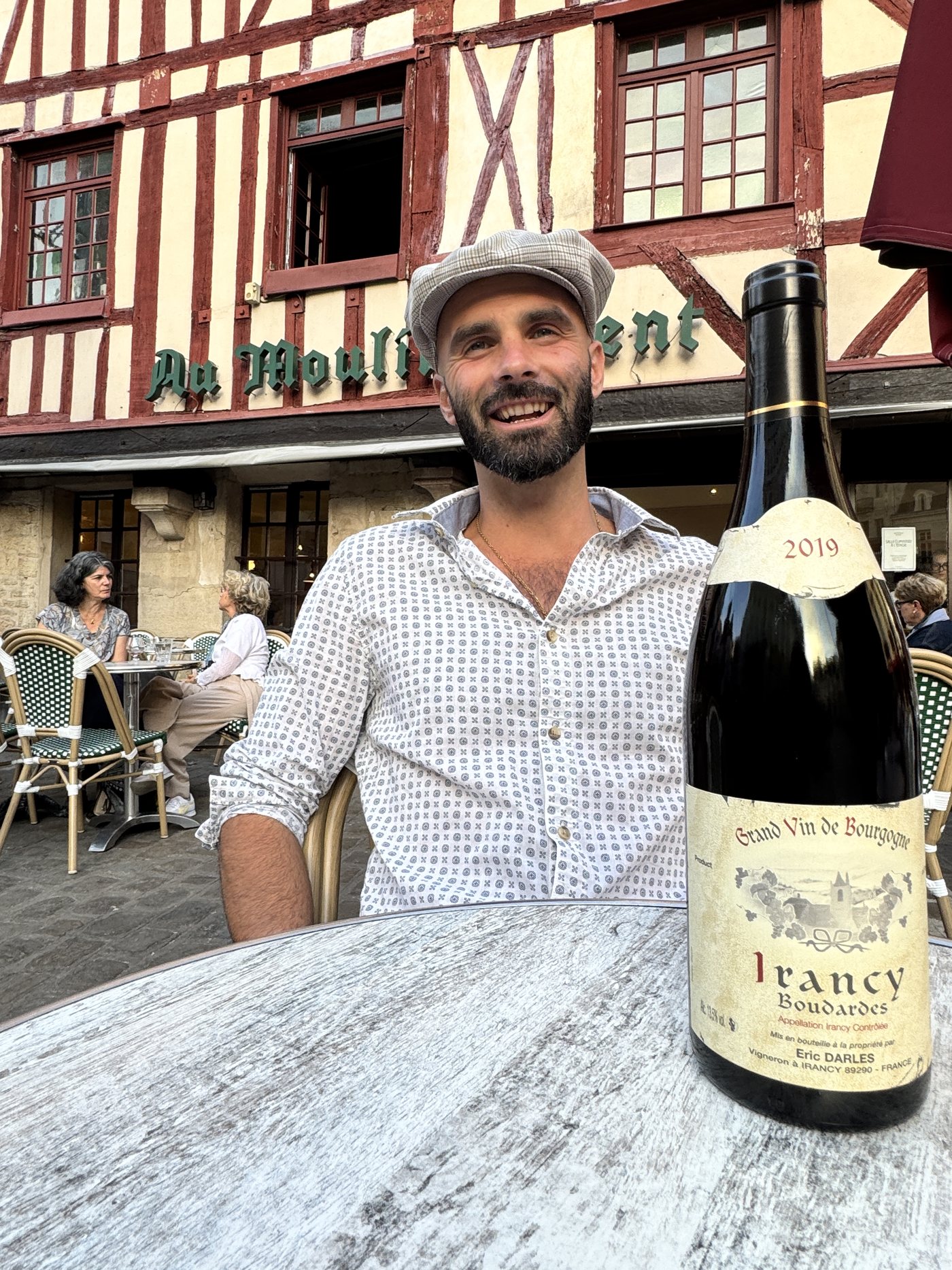
Our IrancyÉric Darles's Irancy Boudardes 2019 is mostly pinot noir with a little César. Start it in the light-red row, a little cool, and let it warm in the glass. Marcel's own advice: open it a few hours before you pour.
Beyond the chemistry
Serving temperature often matches the way we use the wine. A tannic red, served warmer, goes naturally with a winter meal, something comforting at the table. A cool white or rosé suits an apéritif (the drink before dinner) out on a terrace: thirst-quenching, no food needed alongside.
The chemistry and the custom point the same way. They reinforce each other rather than pull apart.

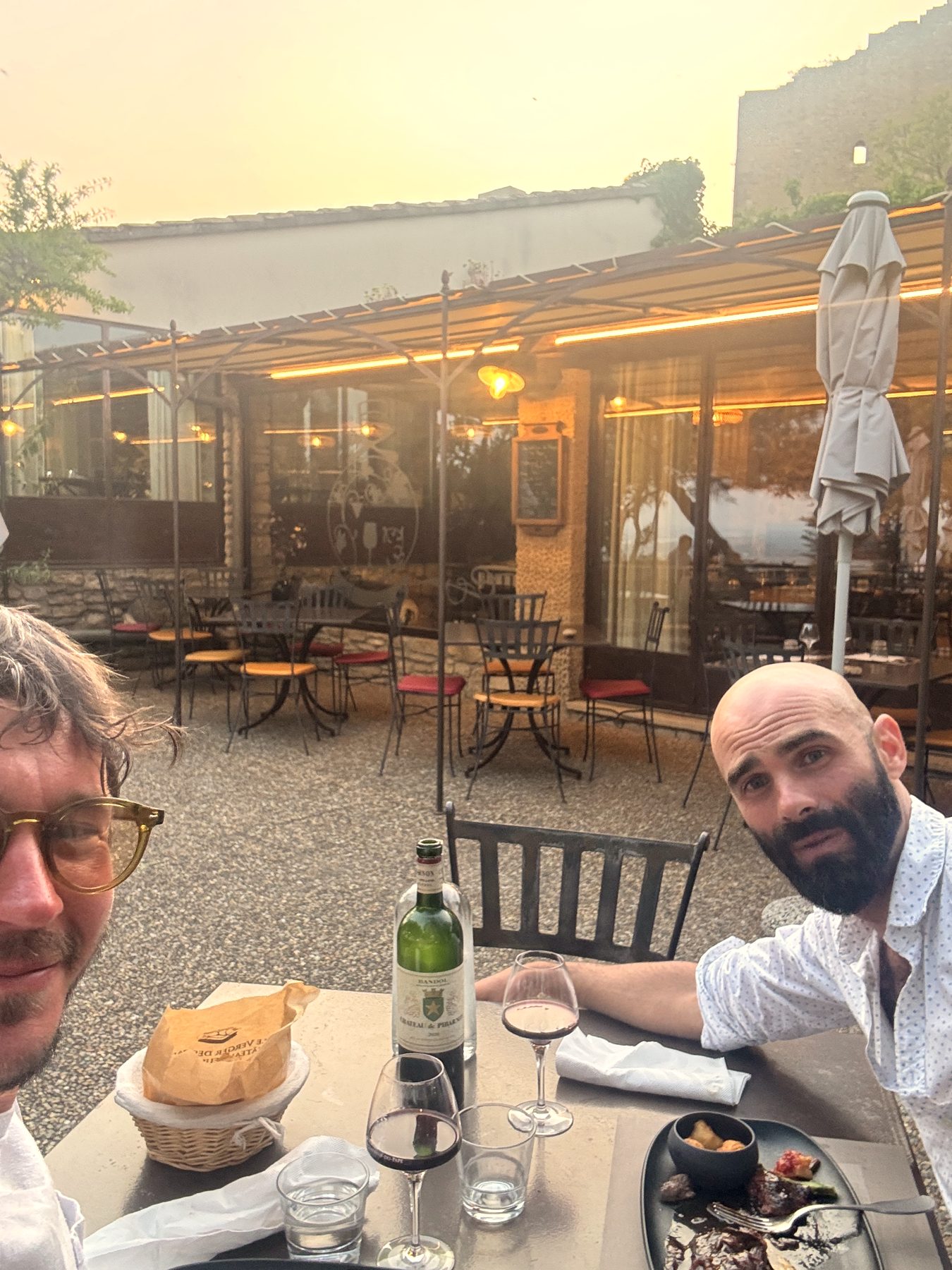
Châteauneuf-du-Pape · the terrace · June 2025
When in doubt, serve it a little too cool rather than too warm.
Try it at home
Not sure how cool a wine should be? Serve it a little too cool rather than too warm. It will warm up in the glass in a few minutes; you cannot cool it down so easily once it is poured.
While we are on serving, here is a gesture people love to complicate. Some decant a wine (pour it into a carafe to give it air) in front of the whole table with the solemnity of a birth, when two more minutes in the glass would do much the same job. "Two more minutes in the glass."

Dijon · a square, a bottle · September 2026
The words
| température de service | serving temperature, how cool or warm a wine is when poured |
| astringence | the dry, gripping feeling tannin leaves in the mouth |
| volatil | quick to evaporate, which is how aromas reach the nose |
| fermé · muet | closed, mute: a wine that gives little on the nose |
| effervescent | sparkling, with bubbles |
| carafer | to decant: pour into a carafe to give the wine air |