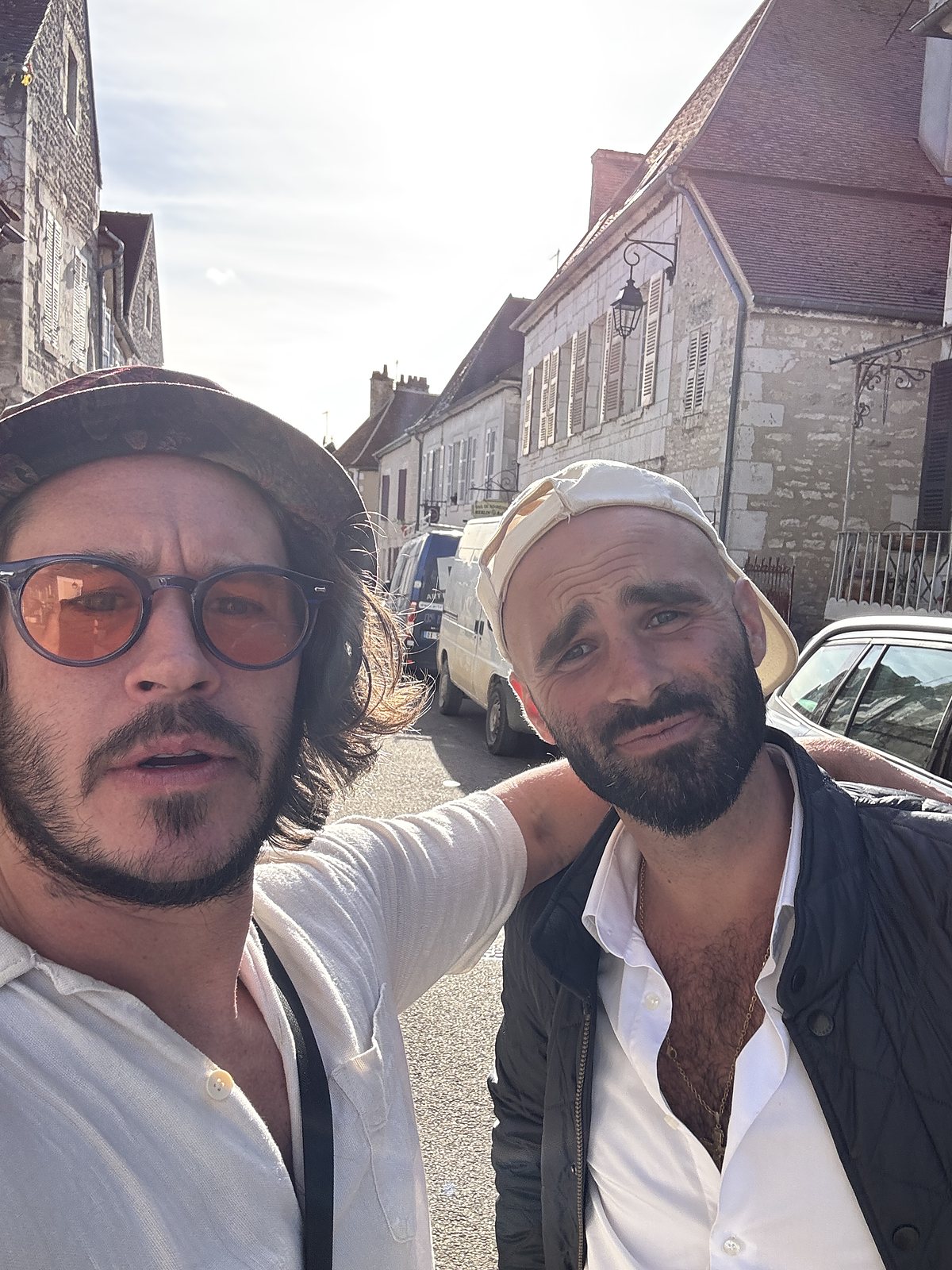
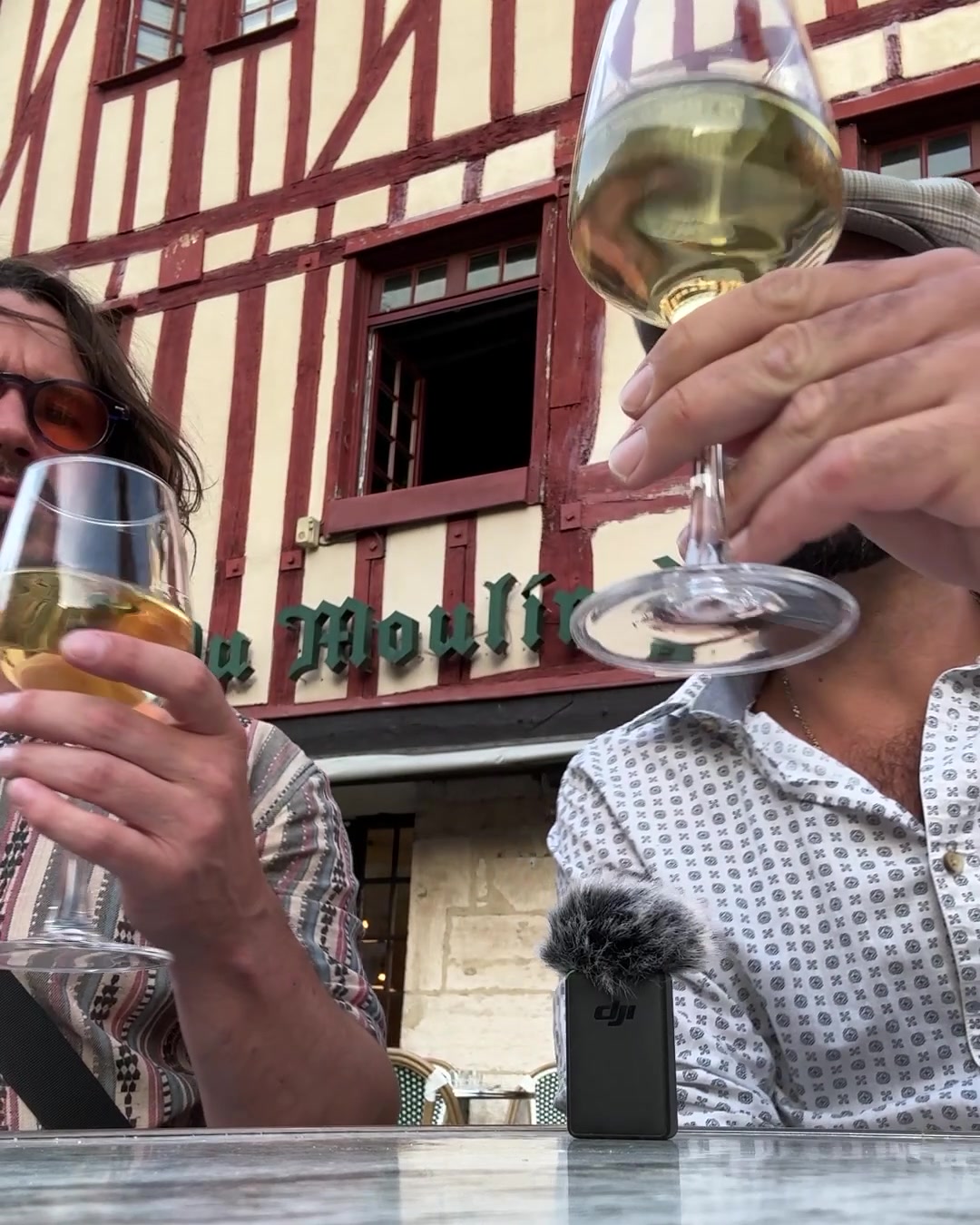
We met at Vézelay with a bottle, and the next day we were in a grower's cellar in Irancy asking the questions that turn an idea into a first case.
The place, in a few words
Northern Burgundy, the Yonne. Irancy is red, Pinot Noir with a little of an old local grape called César allowed in. Chablis, just up the road, is Chardonnay on ancient limestone full of fossil shells.
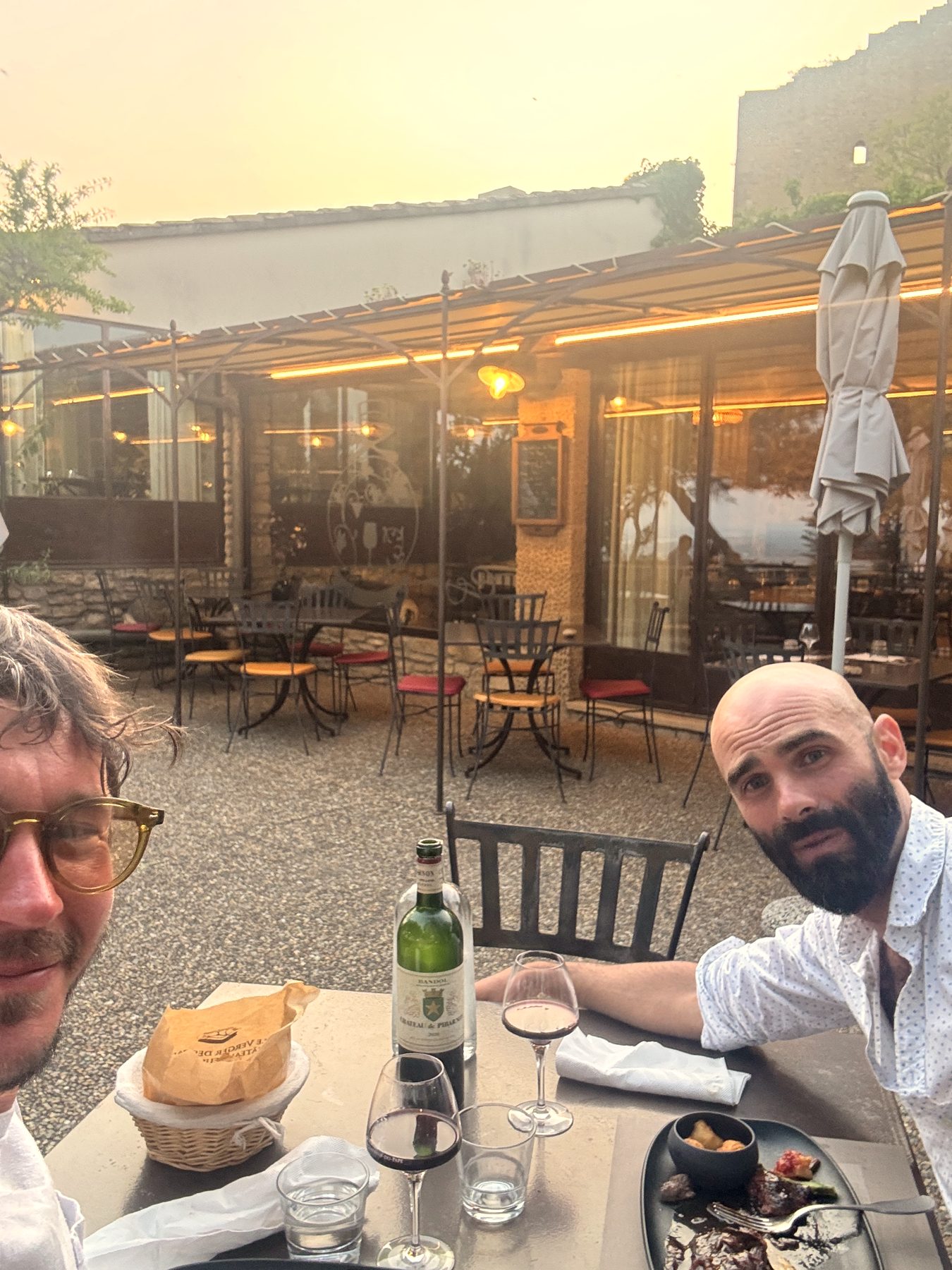
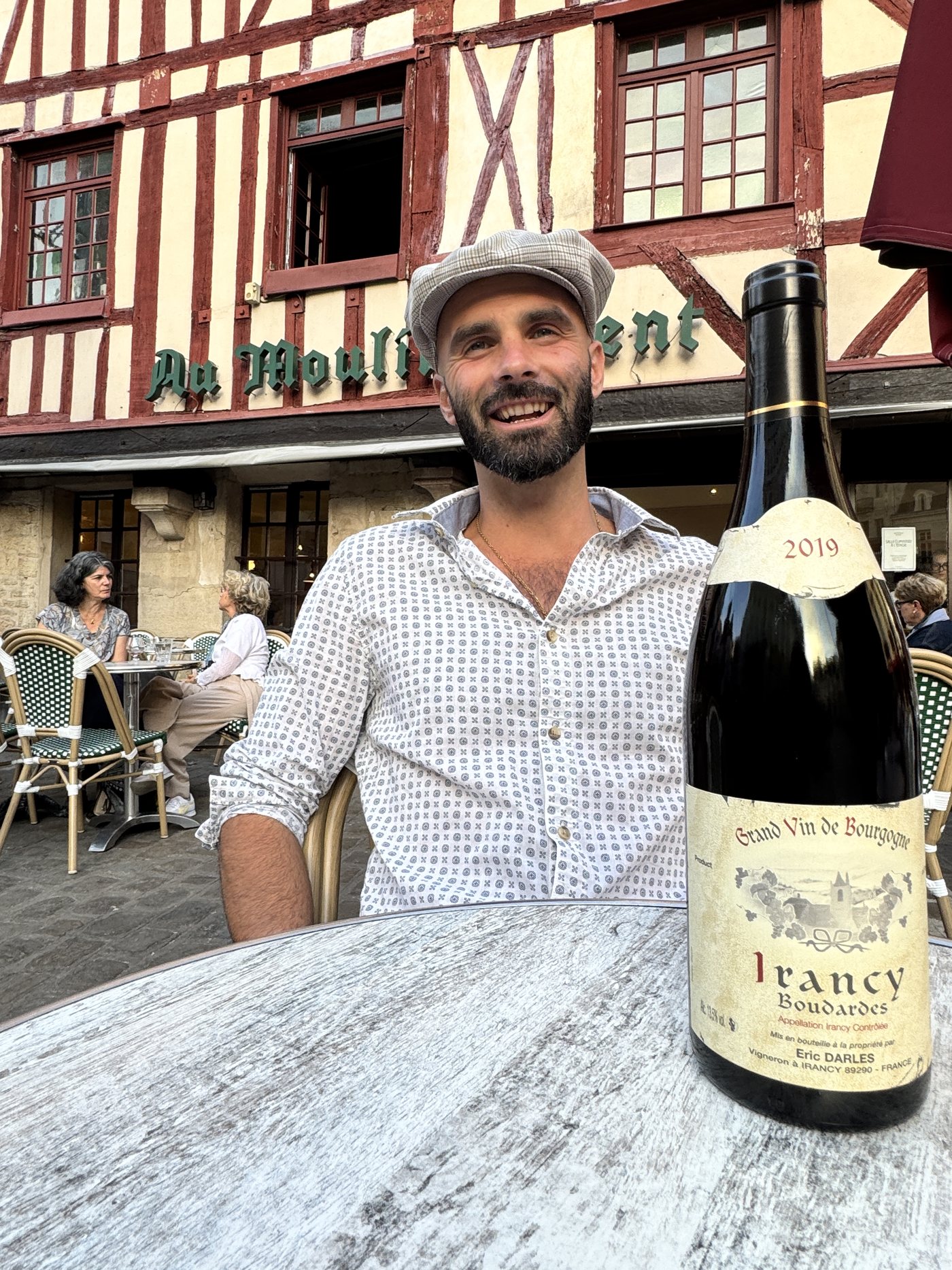
A table on a square, a laptop, a bottle of Éric's Irancy. This is where the site you are reading is being written, and where the films are being cut. It is not finished. Neither are we.
The place, in a few words
Capital of the Dukes of Burgundy, at the top of the Côte de Nuits, the road of the great Pinot Noirs. Mustard, of course. And kir, named after Félix Kir, the mayor who poured blanc-cassis at every reception he gave.
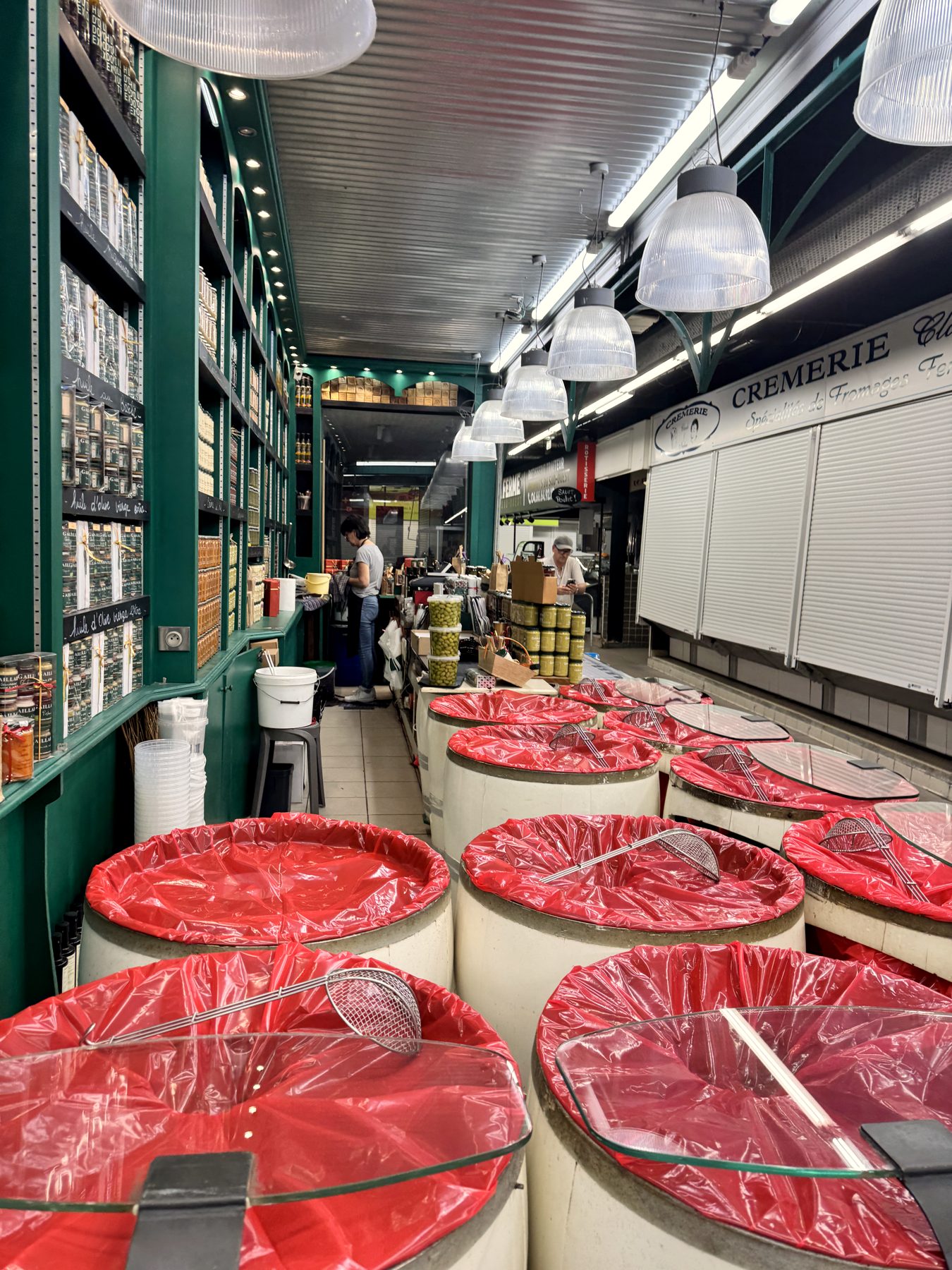
This is where we always come back. Nîmes, its Roman arena, the Feria and its bullfights in spring, and at the heart of the city a covered market under glass where we go down almost every morning.
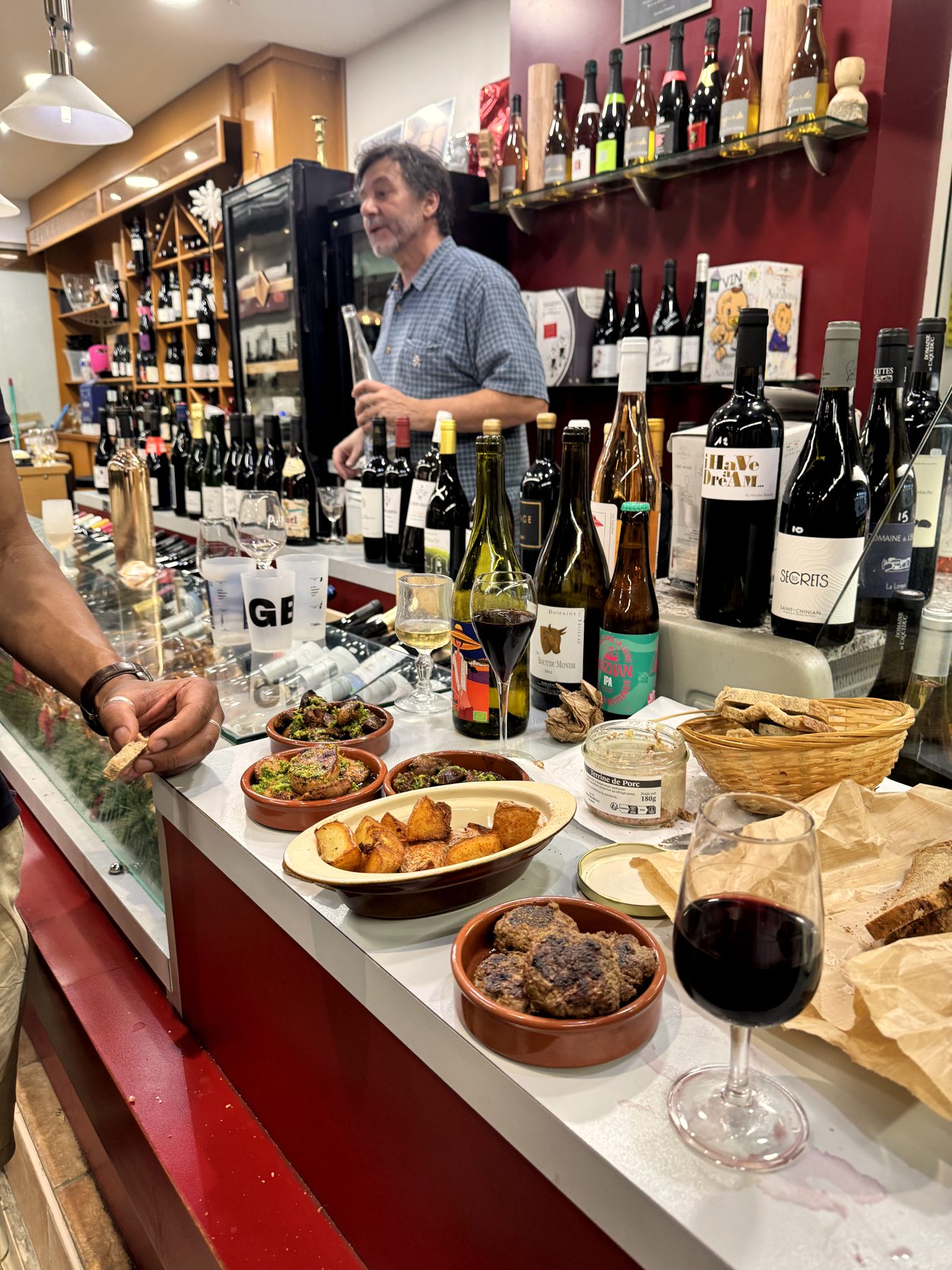
You taste the wine at the counter, you talk to the people behind the stalls, you leave with the cheese, the charcuterie and the morning's vegetables. It is our favourite place to drink a glass and listen to the locals.
Nîmes · Les Halles · the legendary wine merchant · May 2026
You eat things an Englishman does not see every day: grilled duck hearts, and, for the braver, even sheep's testicles. A strange, wonderful feast, and we love it.
And there is the wine merchant, a legend of the market, funny and generous, who pours you a taste and tells you the whole story. You mix with everyone, even on three words of French. A place that simply makes you welcome.
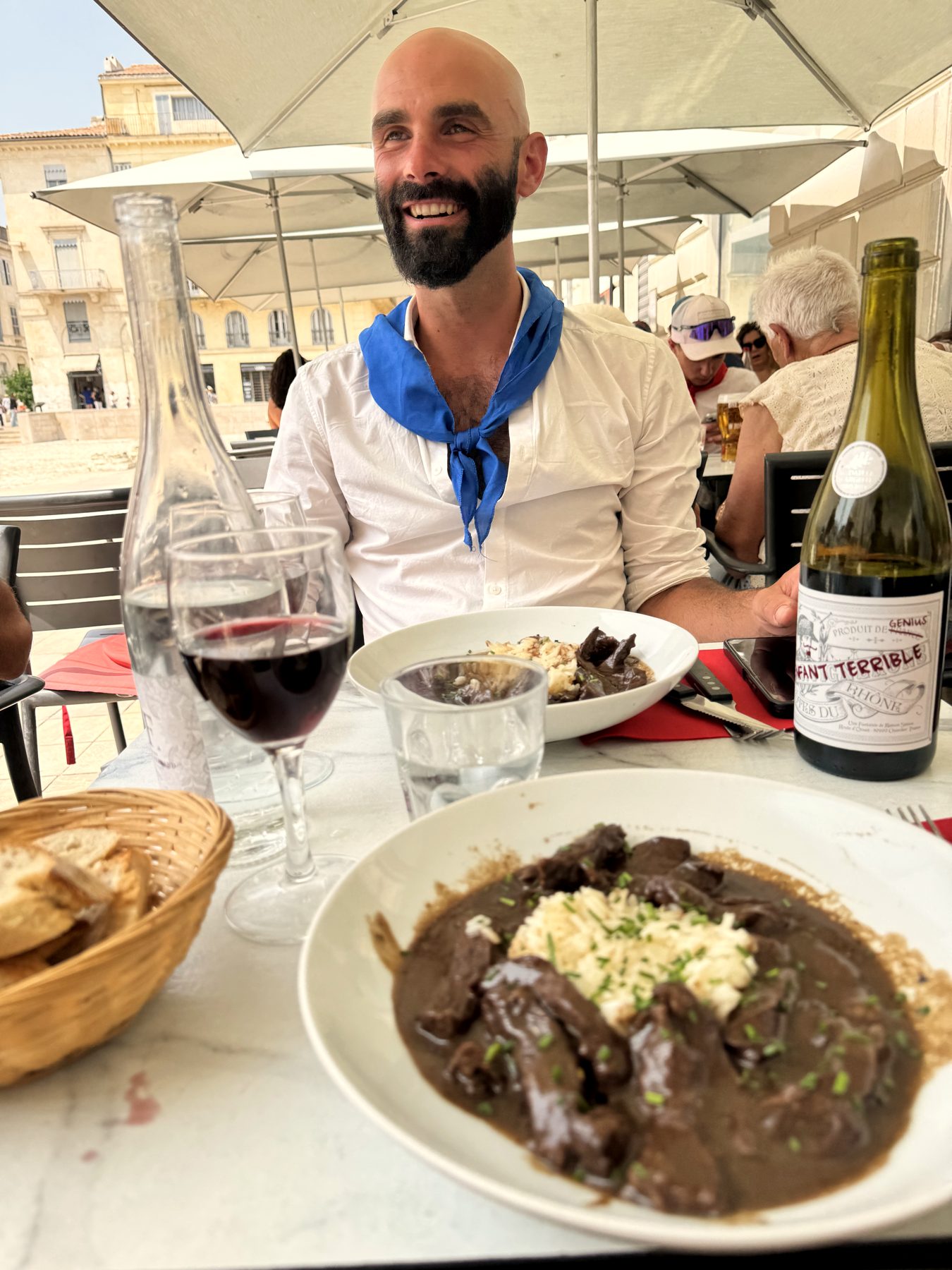
Nîmes has flavours all its own. Brandade, salt cod whipped smooth with olive oil, was more or less invented here. There is gardianne, a slow stew of black bull from the Camargue marshes just south, and oysters from the Étang de Thau on crushed ice by nine in the morning. You can build a whole lunch just walking from stall to stall.
And twice a year, at Pentecost and again in September, the Feria takes the city. The Roman arena fills for the corrida, the streets fill with bodegas and brass bands, and Nîmes eats and drinks outdoors for days on end. Come then, and come hungry.
The tipAsk the merchant for a local thirst-quencher, a well-chilled Costières de Nîmes, and share a board of charcuterie. That is how we always begin.
Stop one · Vaucluse
Châteauneuf-du-Pape. Where everything was said, and nothing decided.
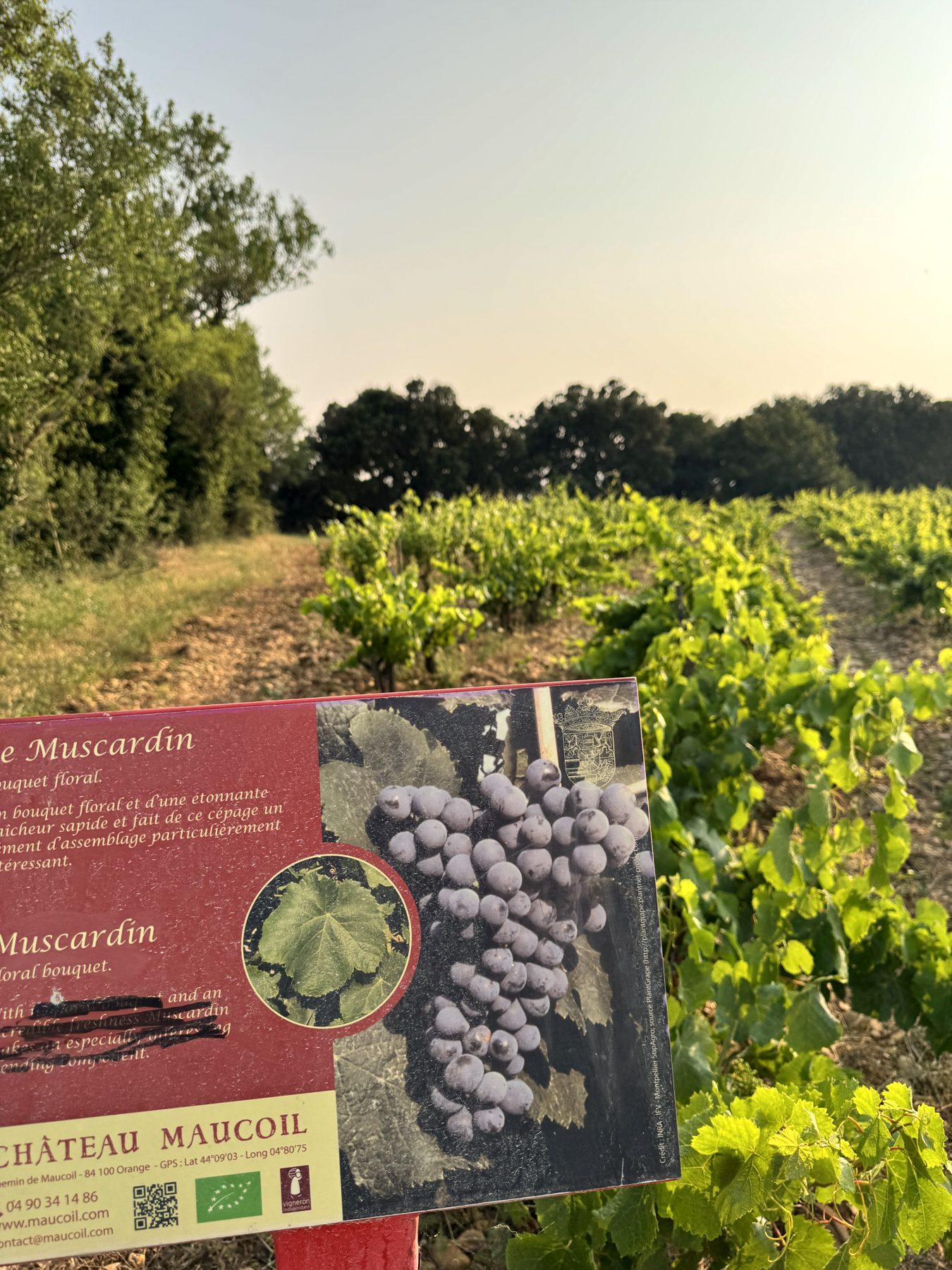
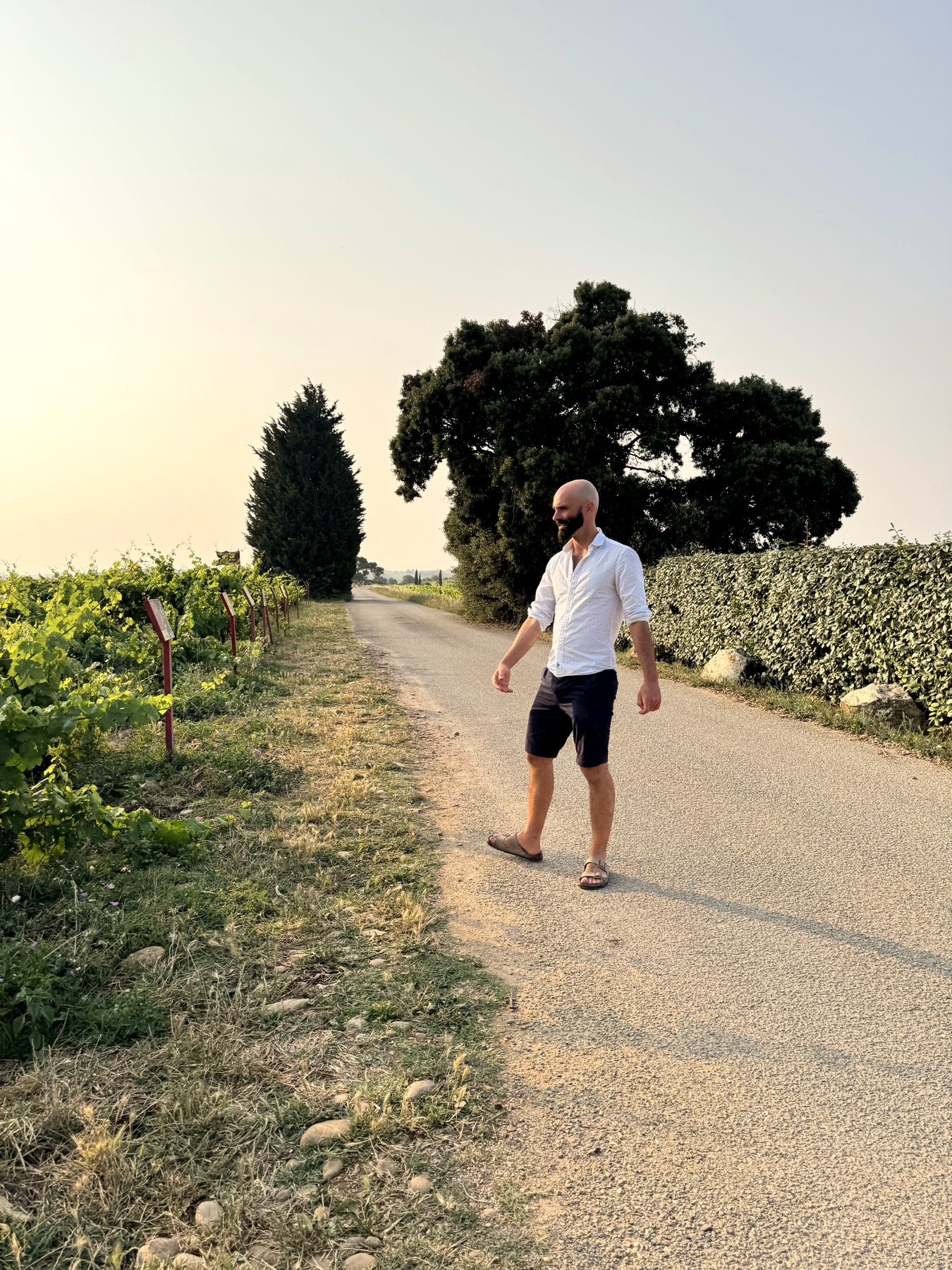
In the fourteenth century the popes of Avignon built themselves a summer residence here, at the top of the hill, looking out over their vines. You can see the appeal. What is left of the château is a broken keep standing against the sky, and all around it, as far as you can see, vines planted in stones the size of a fist, which give back at night the heat they took in by day.
This is where Marcel learned the trade: viticulture and oenology, up to his elbows in the thirteen traditional grape varieties. And this is where Matt came to find him, several times, officially to visit a friend.
We pushed open cellar doors. We tasted, sometimes spat, always talked. And one evening, at the restaurant right at the top of the village, the cicadas finally quiet and the Rhône valley laid out at our feet, the idea arrived on its own between two glasses: you know wine, I know the English. Nobody signed anything. We had more cheese.
Châteauneuf also has a municipal decree, signed by the mayor in 1954, forbidding flying saucers from landing in the commune. It has never been repealed. To this day it has been perfectly obeyed.
Châteauneuf-du-Pape · the terrace · June 2025
Vézelay · the basilica · September 2026
Stop two · the Yonne
Burgundy. Where the idea took shape.
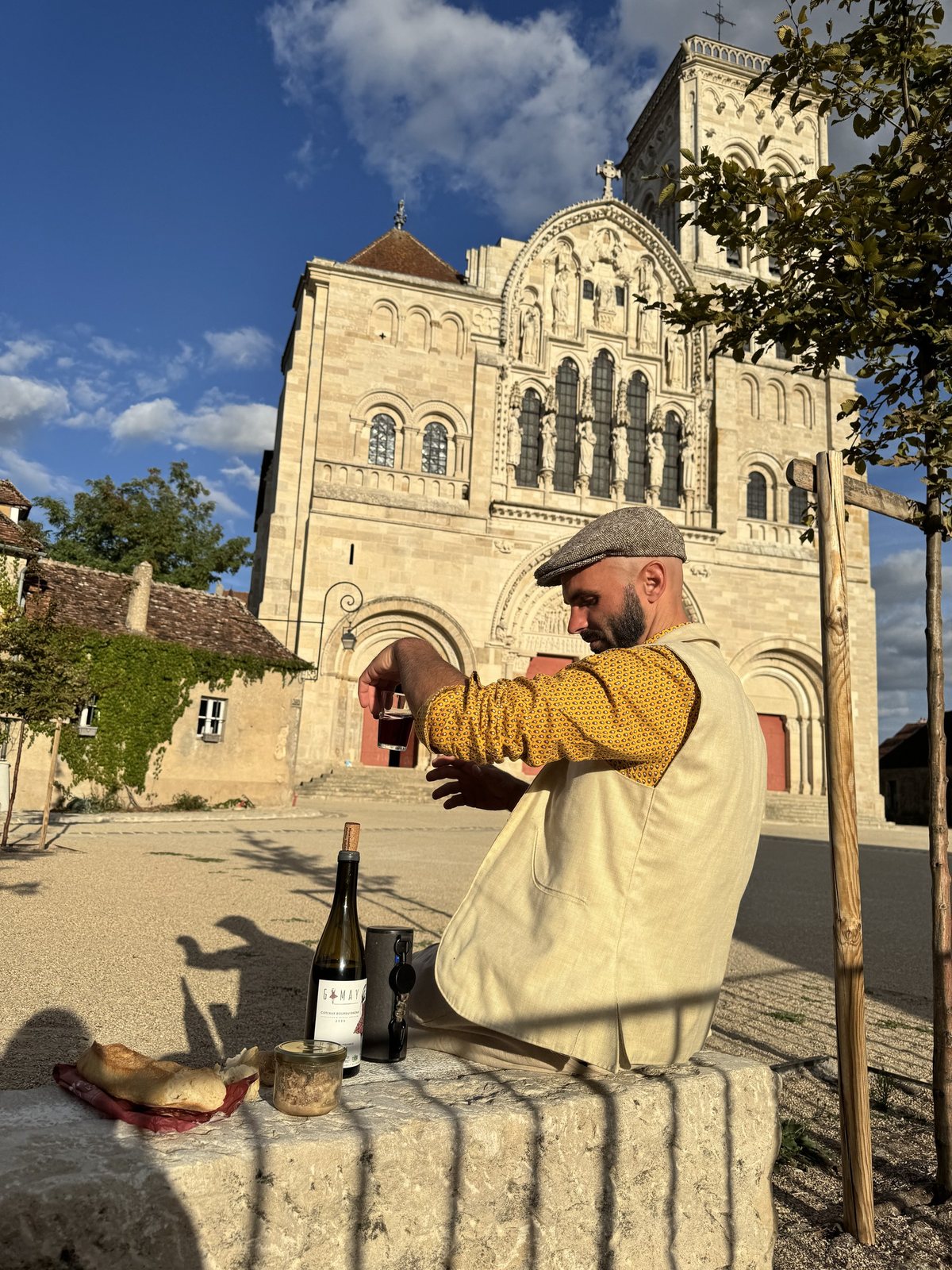
We met up at Vézelay, which is not a bad place to start something. In 1146 Saint Bernard preached a crusade here. In 1190 Richard the Lionheart and Philip Augustus met here before setting off on theirs: an Englishman and a Frenchman heading out together on an unreasonable expedition. Any resemblance is coincidental. Pilgrims still leave from here on foot for Compostela. We opened a bottle on the steps, with bread, facing the basilica.
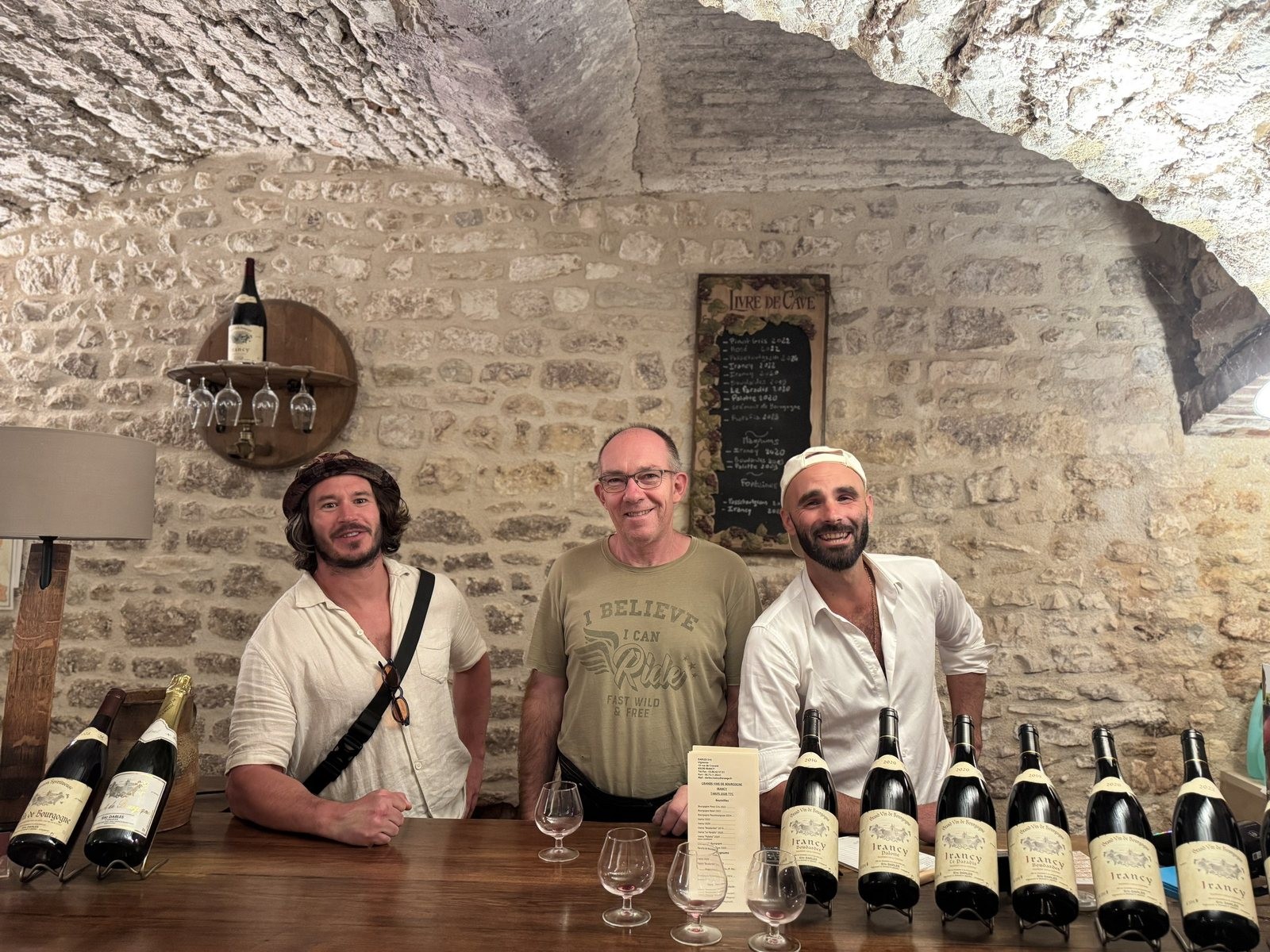
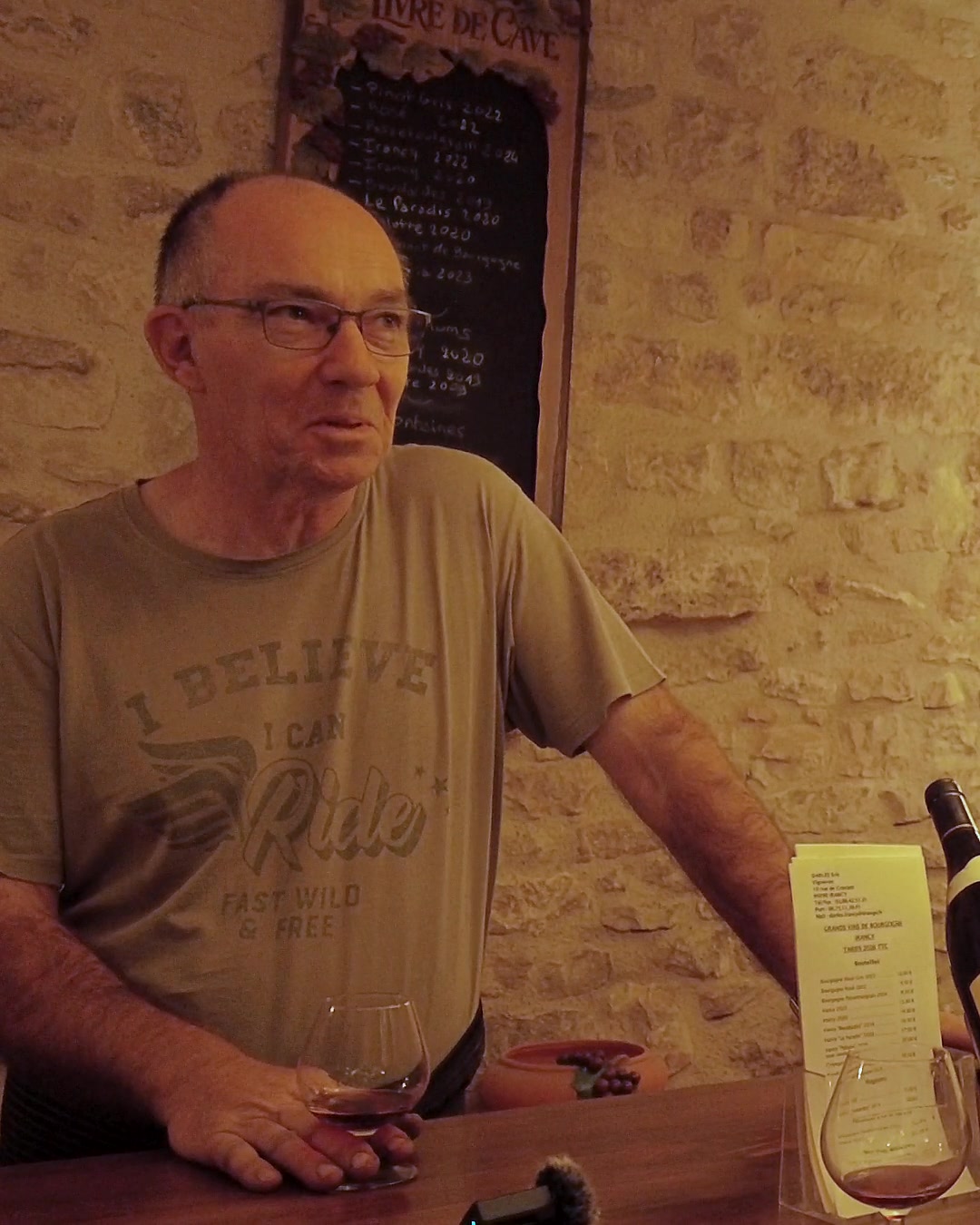
Then the first real expedition: Irancy, a Pinot Noir village tucked into an amphitheatre of slopes, to Éric Darles, our first grower. The cellar, the glasses set down on the barrel, and this time we were no longer tasting for pleasure. Well, not only.
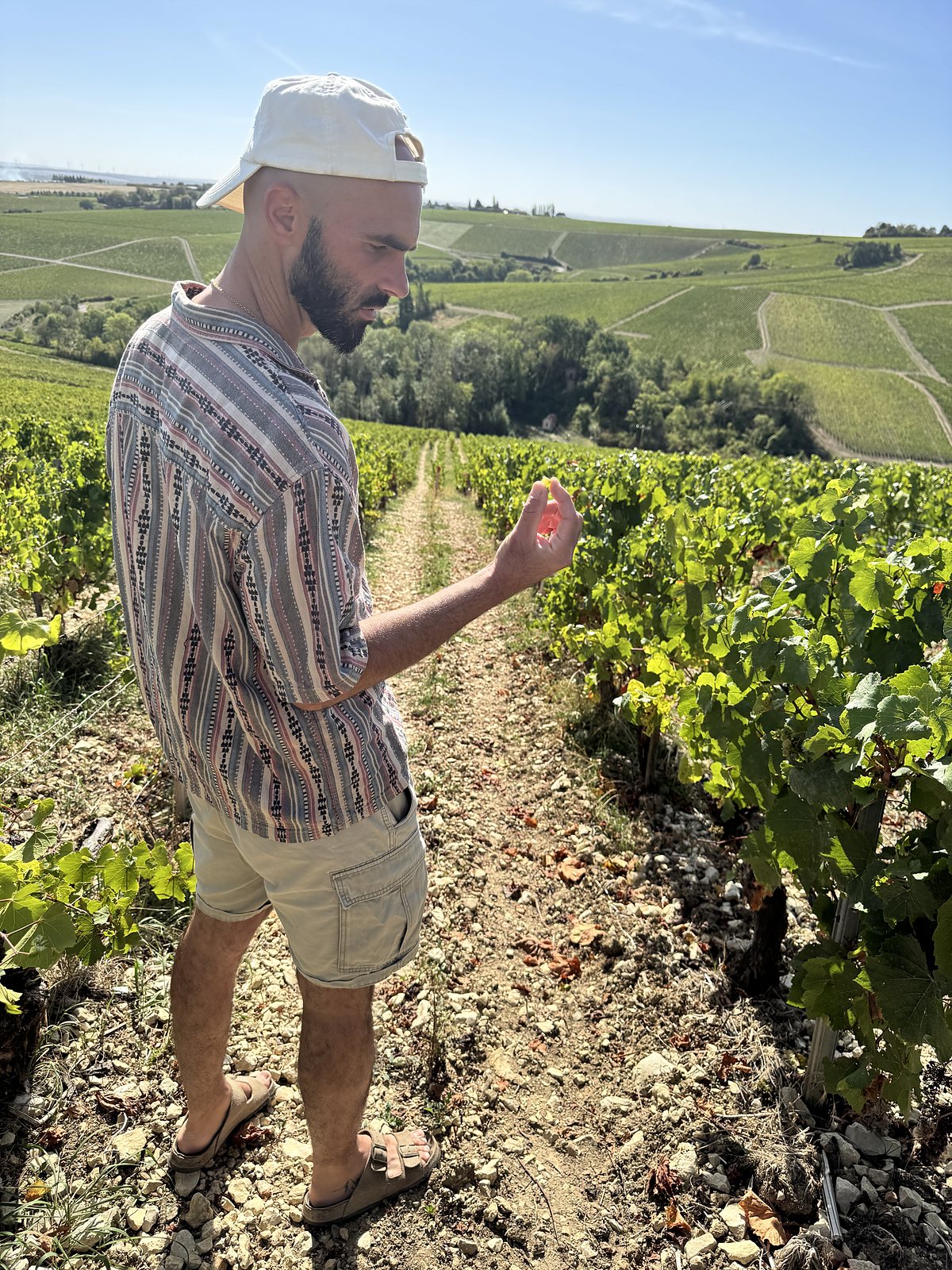
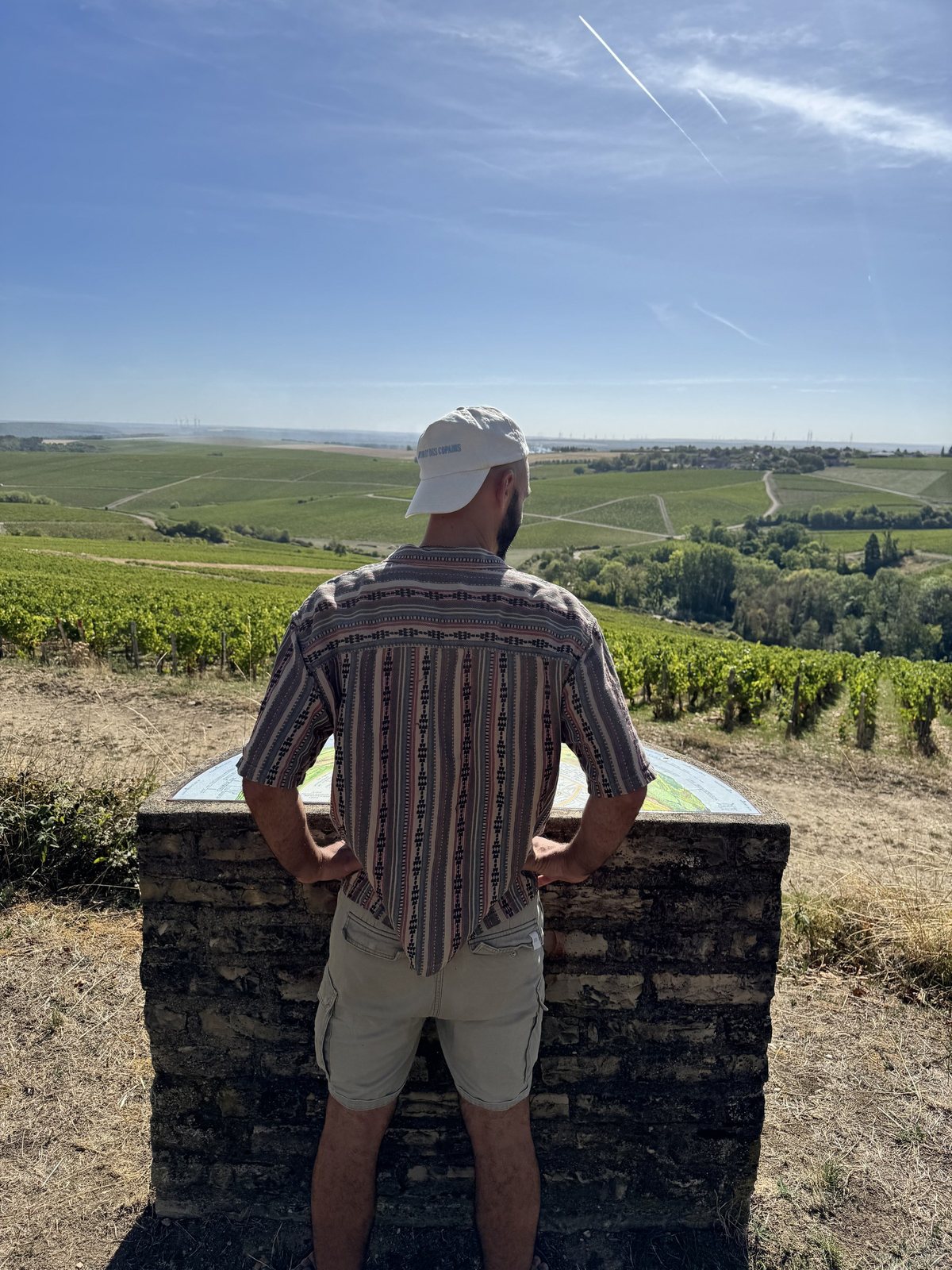
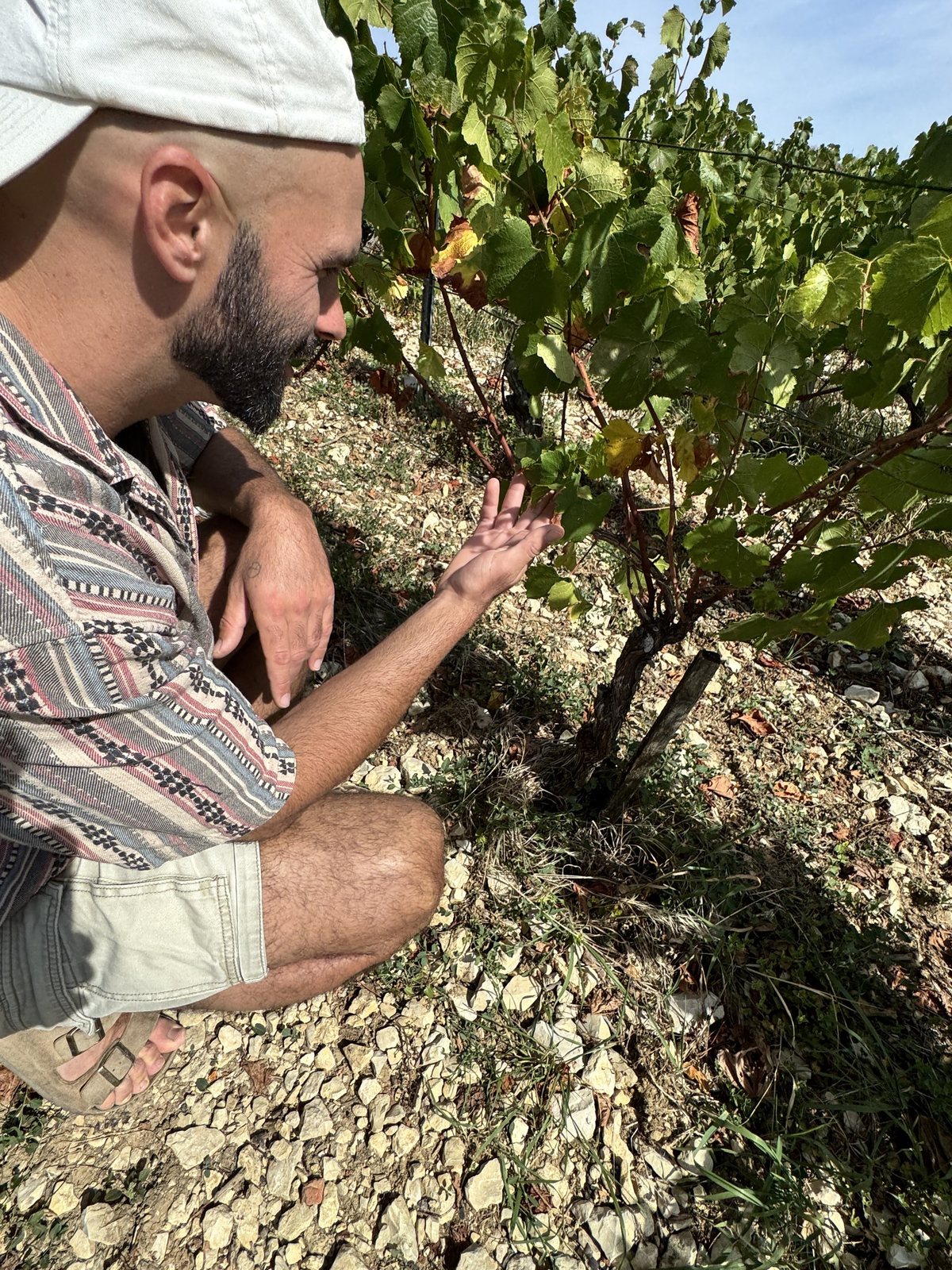
The night in Chablis, and the next morning out in the vines, plot after plot. The soil here is an ancient seabed: you can pick up tiny fossil oysters a hundred and fifty million years old. Chardonnay grows on shellfish, which may explain why it gets on so well with them at the table.
Somewhere between the cellar and the plots, the idea stopped being an idea. There was a first grower, a first wine to choose, and a list of things to do that kept getting longer. Then the road turned east, towards Dijon, with a case in the boot.
Irancy · in the cellar · September 2026
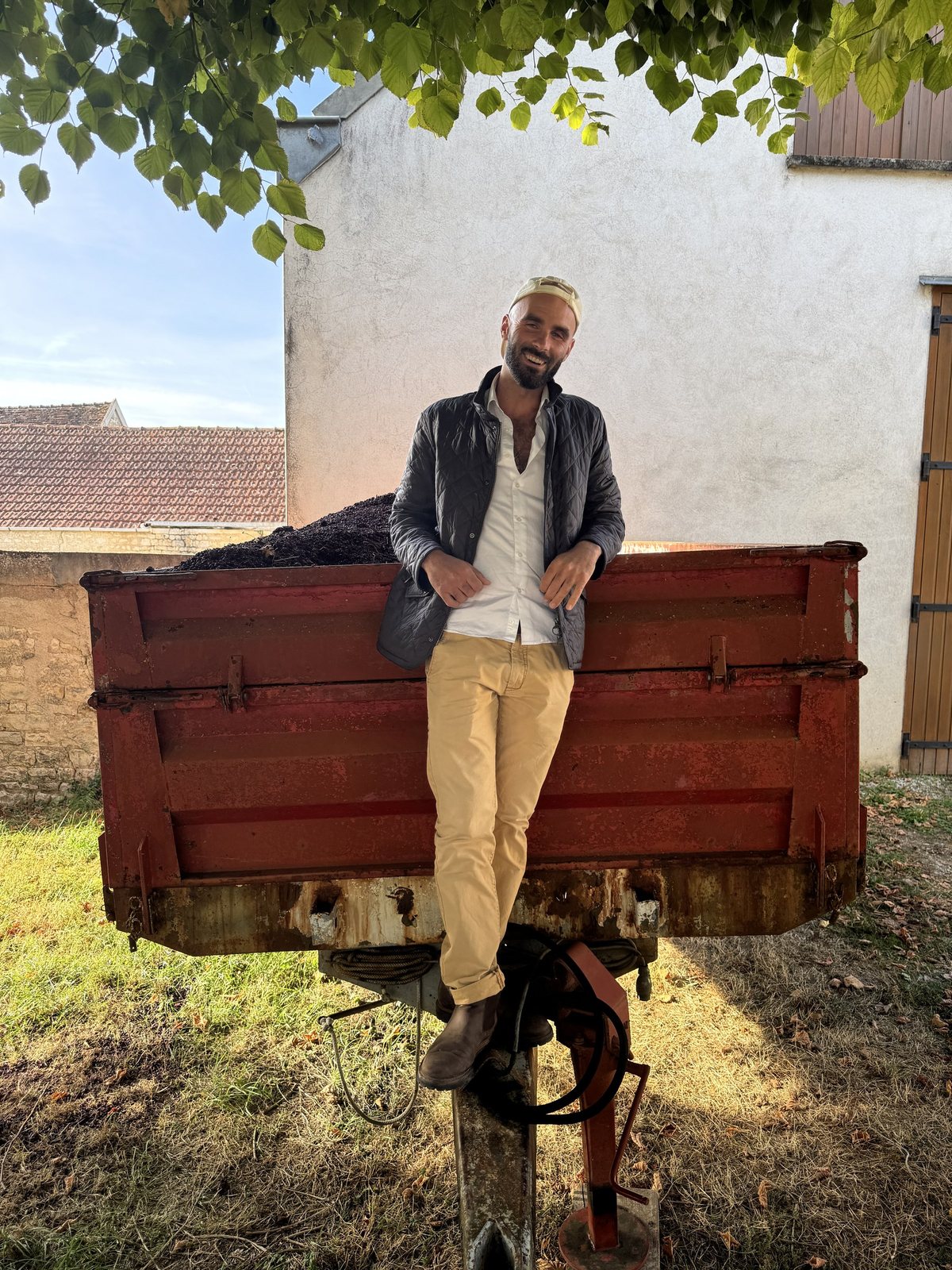
The Yonne · end of harvest · September 2026
Chablis · in the plots · September 2026
A note on place
What is northern Burgundy like in mid September?
All of this sits in the Yonne, at the northern edge of Burgundy, between Paris and Dijon. Vézelay is the hill town with the basilica, a UNESCO World Heritage site, and since 2017 it has had a small appellation of its own for white wine from Chardonnay. Irancy is red country: Pinot Noir with a little of the old local grape, César, grown on the slopes around the village, an appellation since 1999. Chablis, and villages like Courgis within the same appellation, means Chardonnay on Kimmeridgian limestone and marl, soil that is full of fossil oysters.
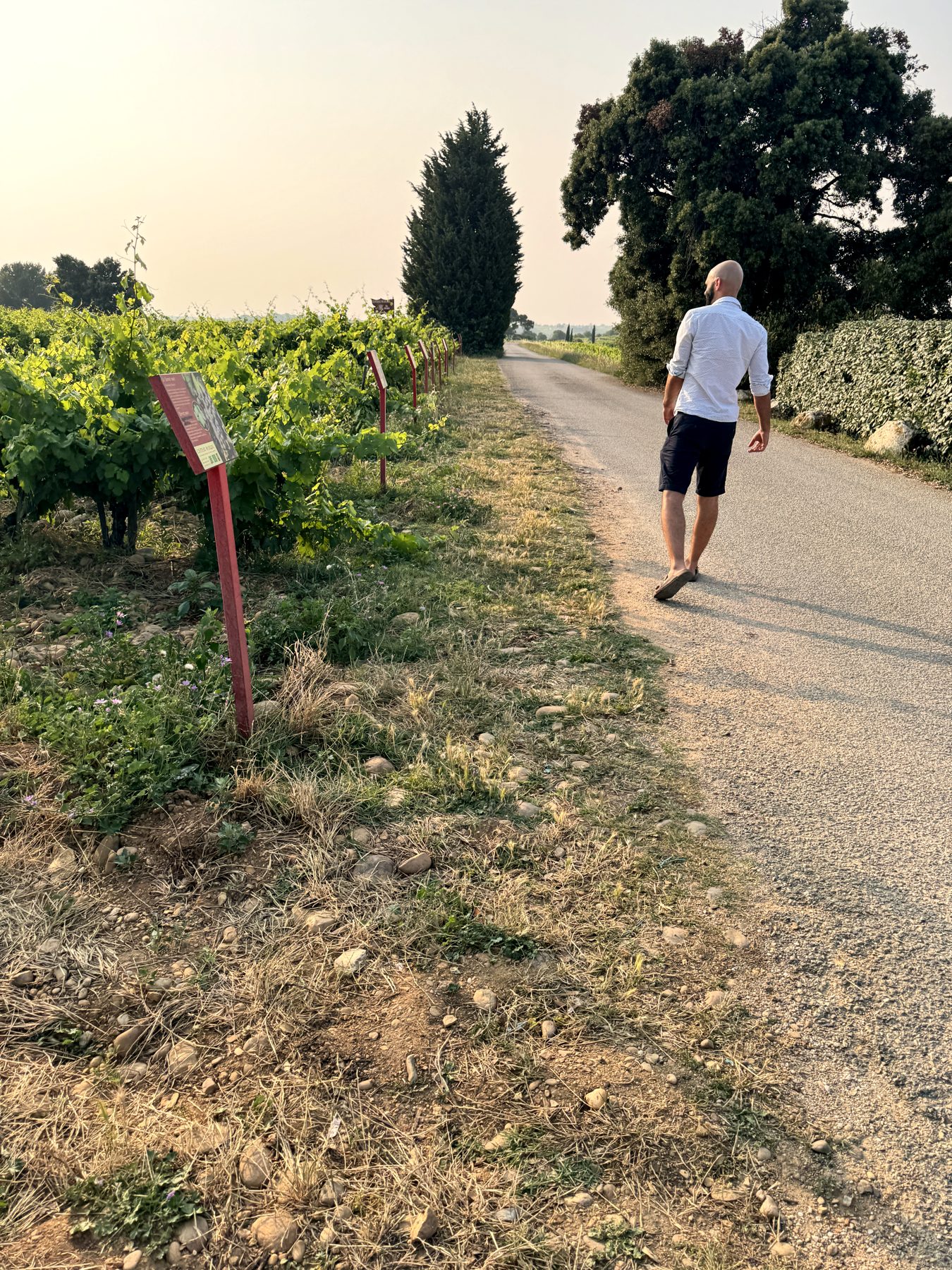
Mid September is the hinge of the year. The harvest is ending, and nobody stops: the trailers come in, and the next morning people are back out between the rows or down in the cellar. It is a working landscape, which is what we wanted to show. Three short films from those three days: a pavement counter in Vézelay, Éric in his cellar at Irancy, talking about his rows, a walk through the vines at Courgis.
Vézelay · on the high street · September 2026
Irancy · Éric talks soil, Marcel listens · September 2026
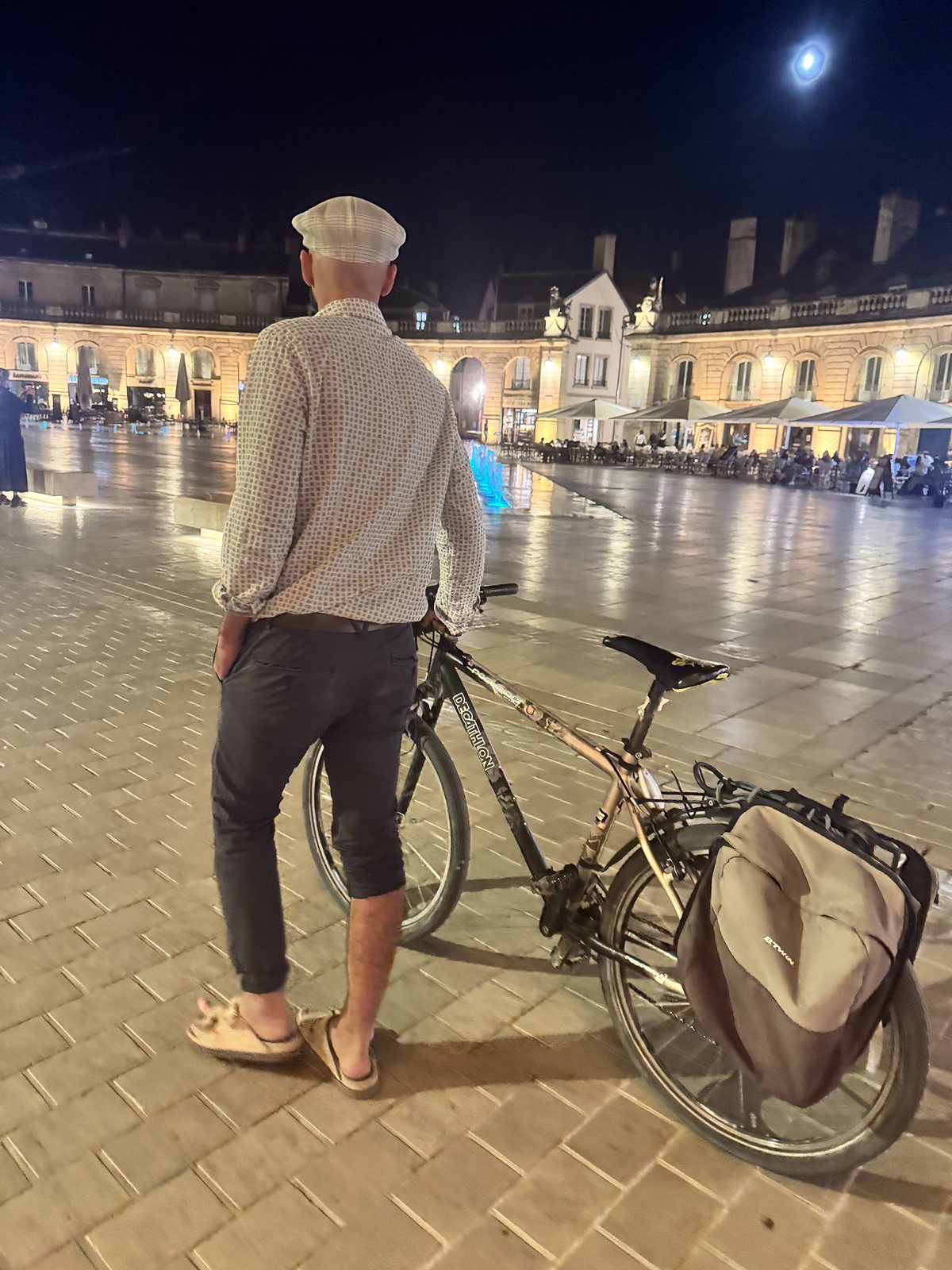
Down from the Yonne to Dijon, capital of the Dukes of Burgundy, who for a while rivalled the King of France and were keen for everyone to know it. The houses on the squares are half-timbered and lean in to listen. The roofs are tiled in coloured diamonds. The mustard, we are sorry to report, is mostly made from Canadian seed these days. The wine is not.
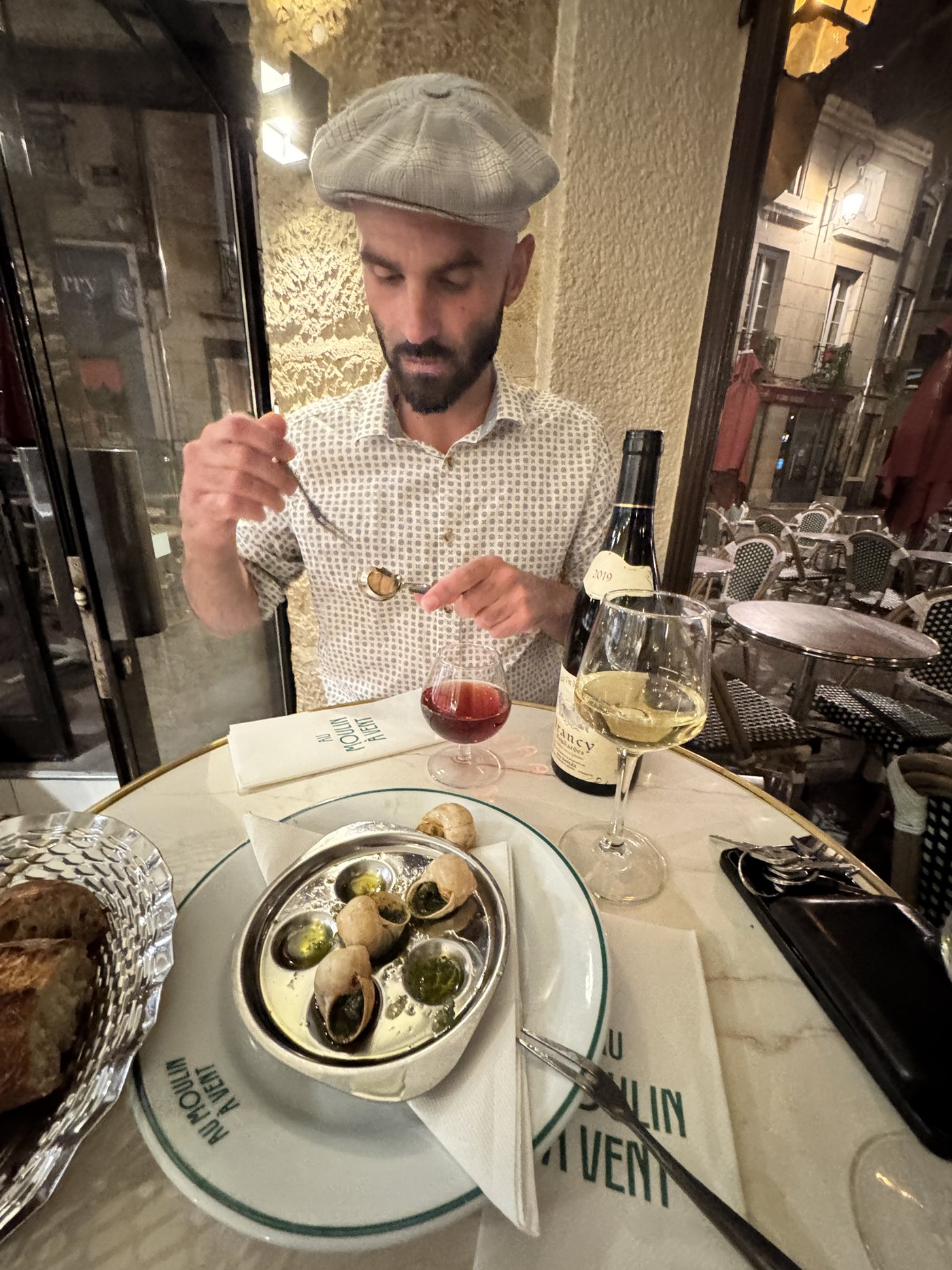
This is where the talking stopped and the building started. A table outside on a square, a laptop, a bottle of Éric's Irancy, and the two of us writing this site page by page, sometimes arguing about a comma. Every word you are reading was written here, between the snails and the cheese. So were the subtitles on the films.
We stroked the owl on Notre-Dame, with the left hand, as you must, so the wish works. Then glasses on a terrace, a square full of people, and at the next table a lovely English couple who did not yet know they had just met their future wine merchant.
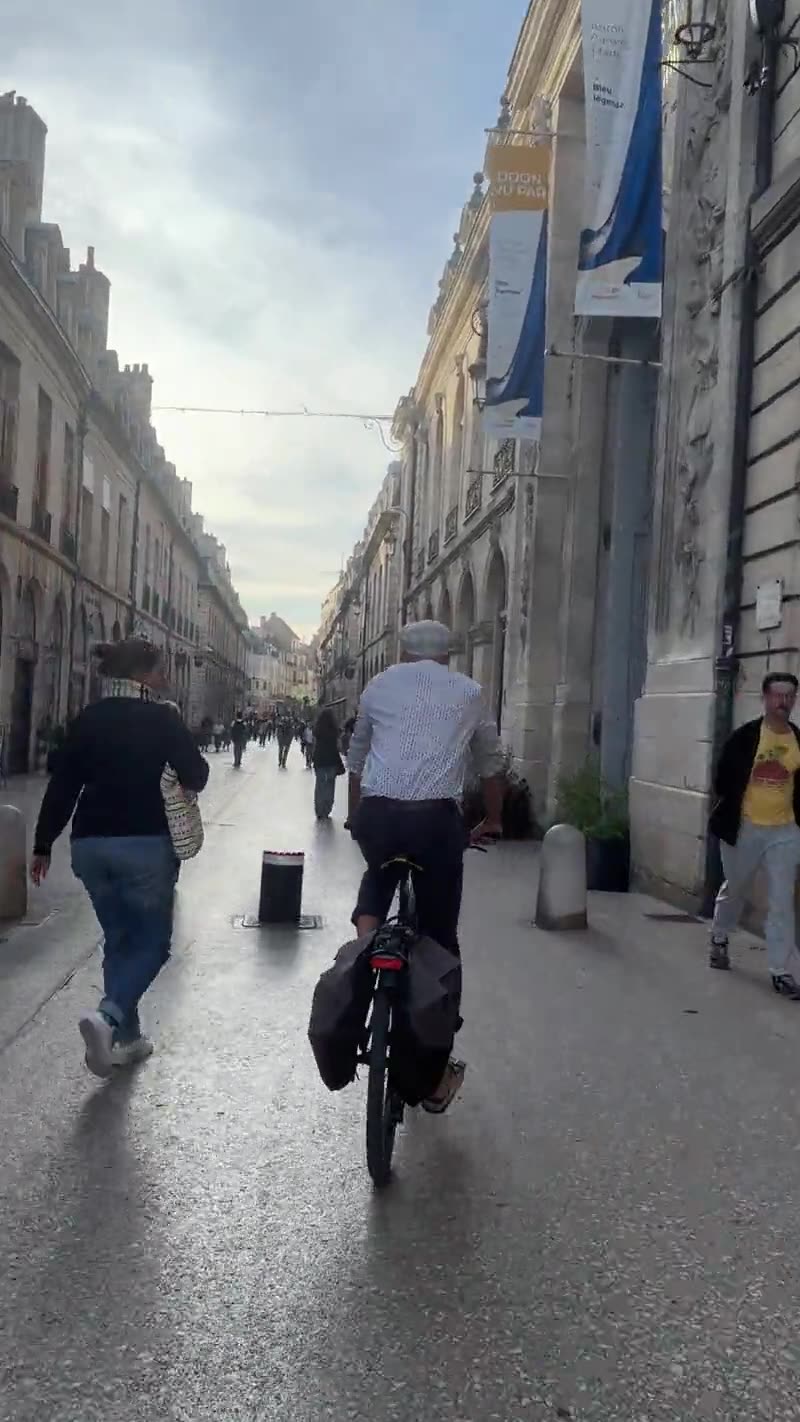
One of us rode through the old town on a bicycle with panniers. The other filmed it. That is roughly how the work has been divided ever since, and nobody is complaining.
Dijon · a square, a bottle, a laptop · September 2026
Dijon · snails, as one must · September 2026
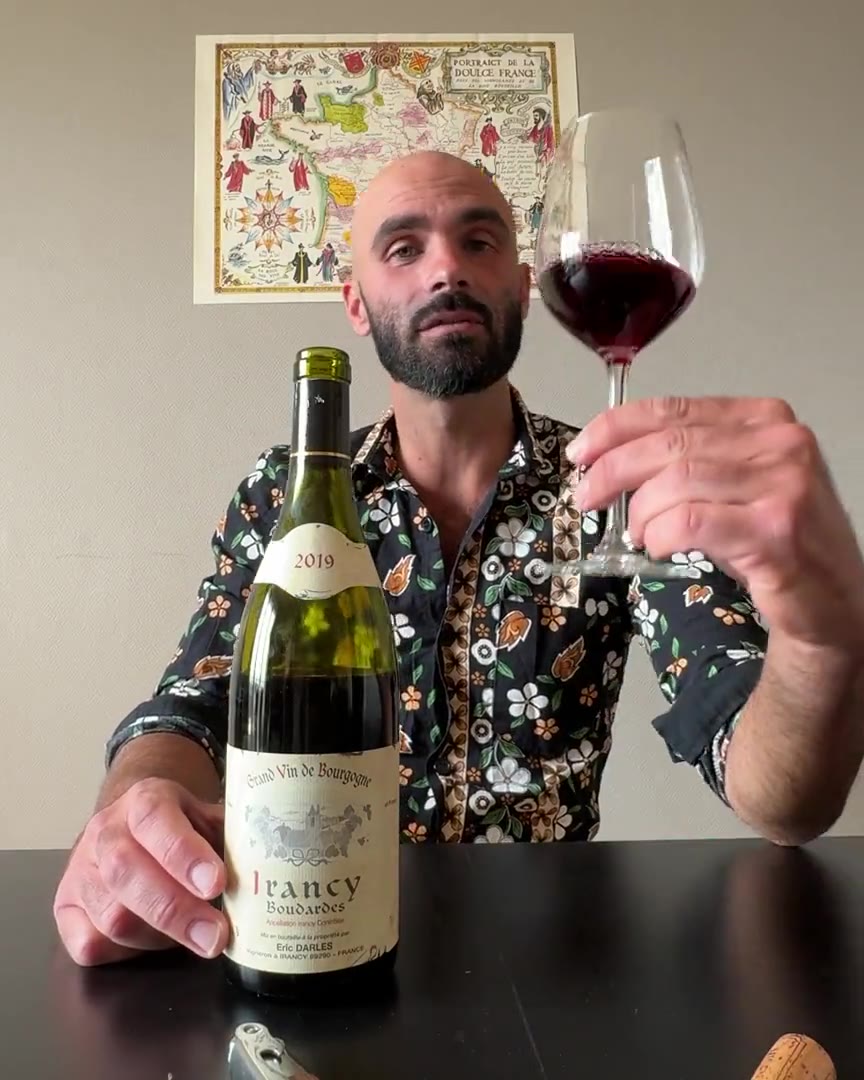
Dijon · Boudardes 2019 in the glass · September 2026
Another region, another grower, another table. Each time: a few photos, a bit of film, and a few plain words about the place and the wine. If you would rather just drink it, that is fine too.
Join the list.
Nothing to pay today. We write to you when each new grower is ready, and you decide then.
We keep your address to write to you about Tiños Viños, and nothing else. One word and you are off it.
 Tiños Viños